
Last updated September 20, 2026
Free on-site gate assessment - hinges, posts, and your LiftMaster or Nice gate operator checked before anything is quoted
The assessment is free and the quote is the invoice.

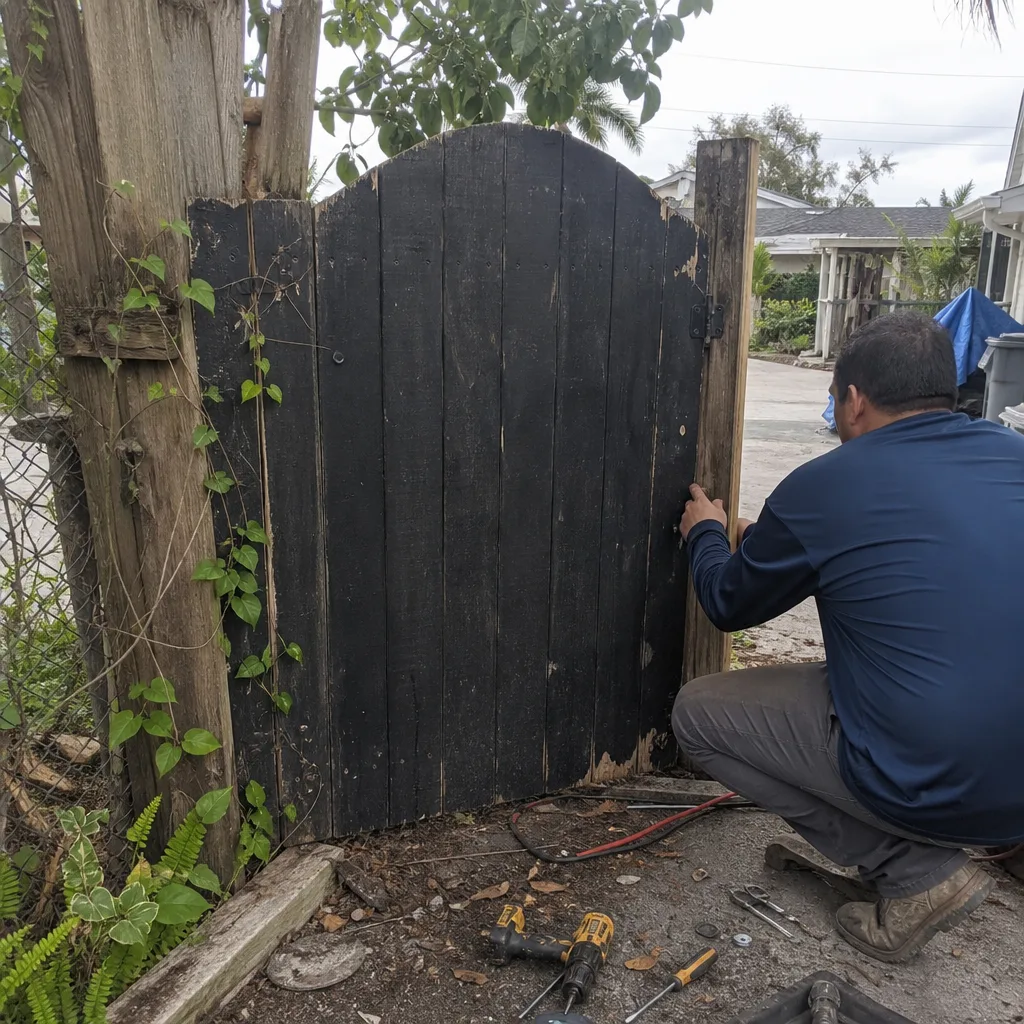 Before
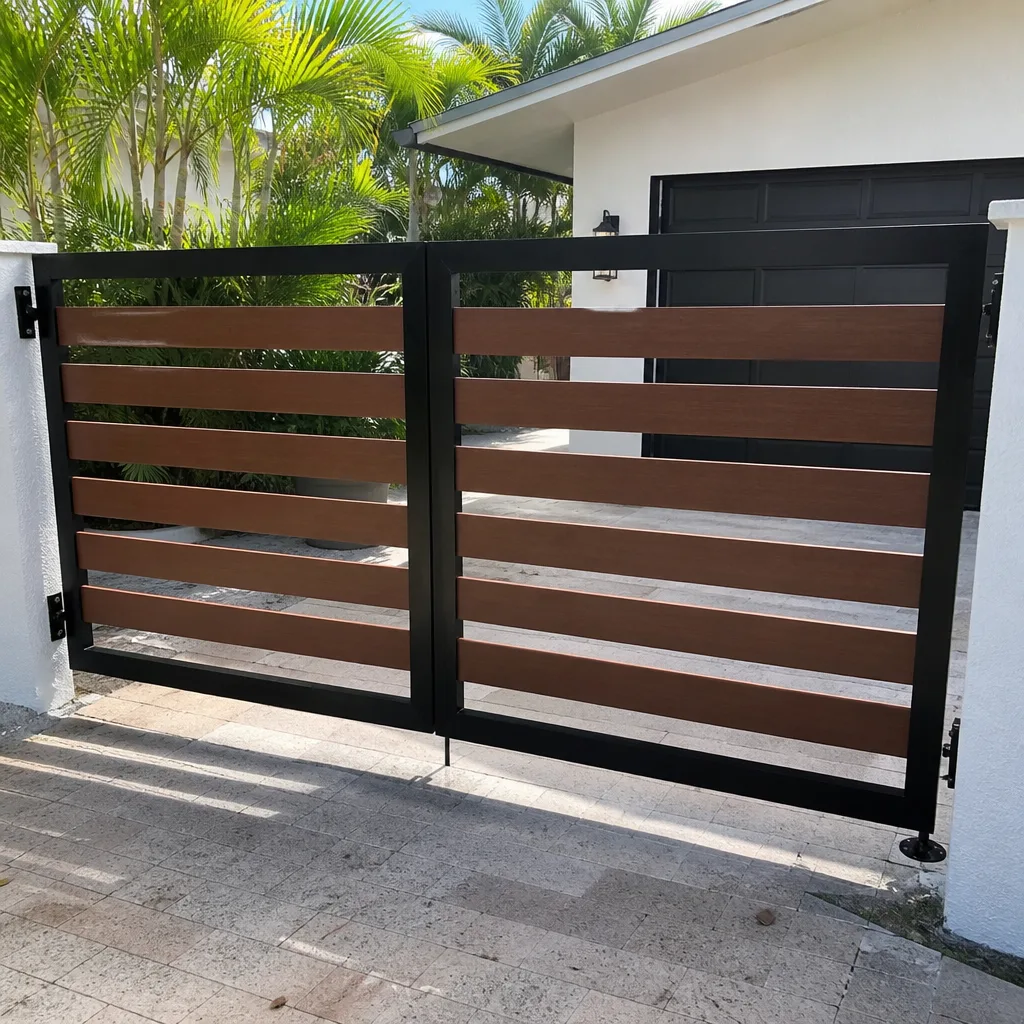 After
After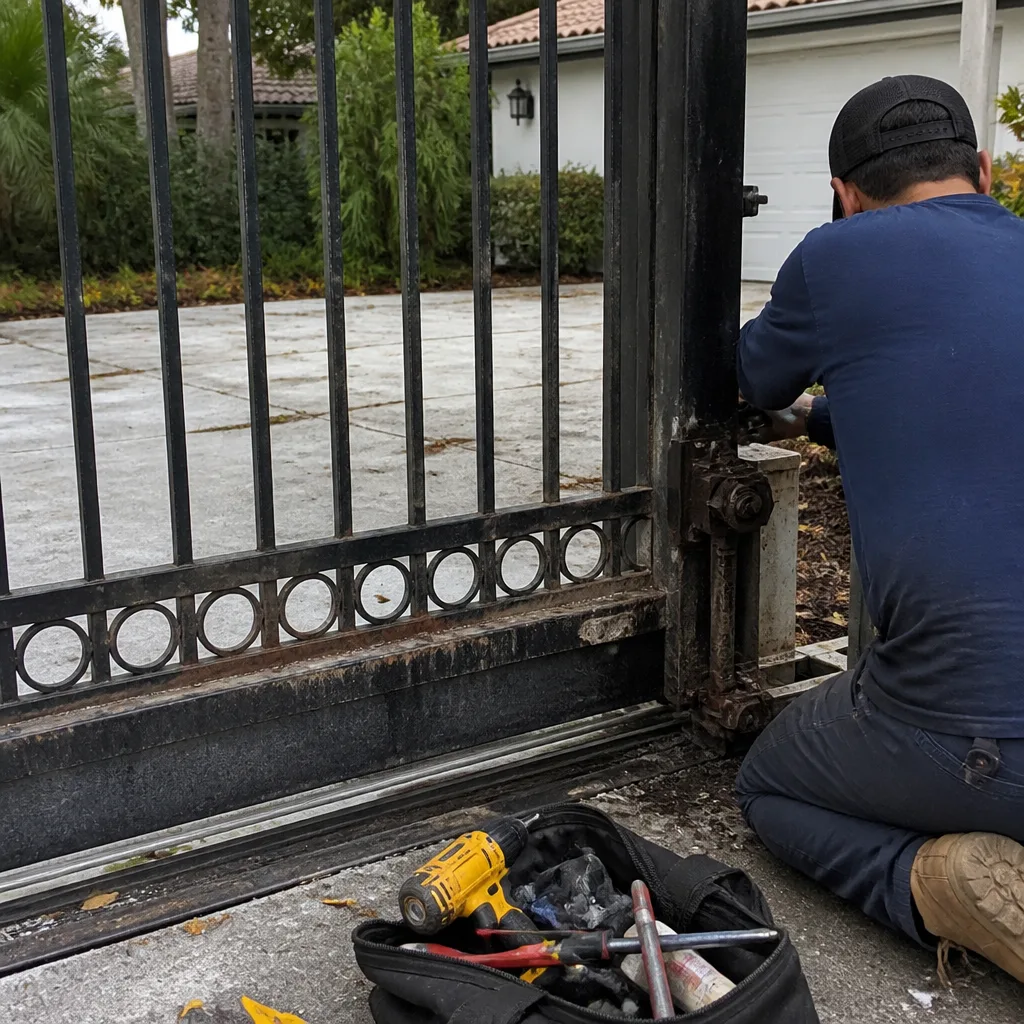 Before
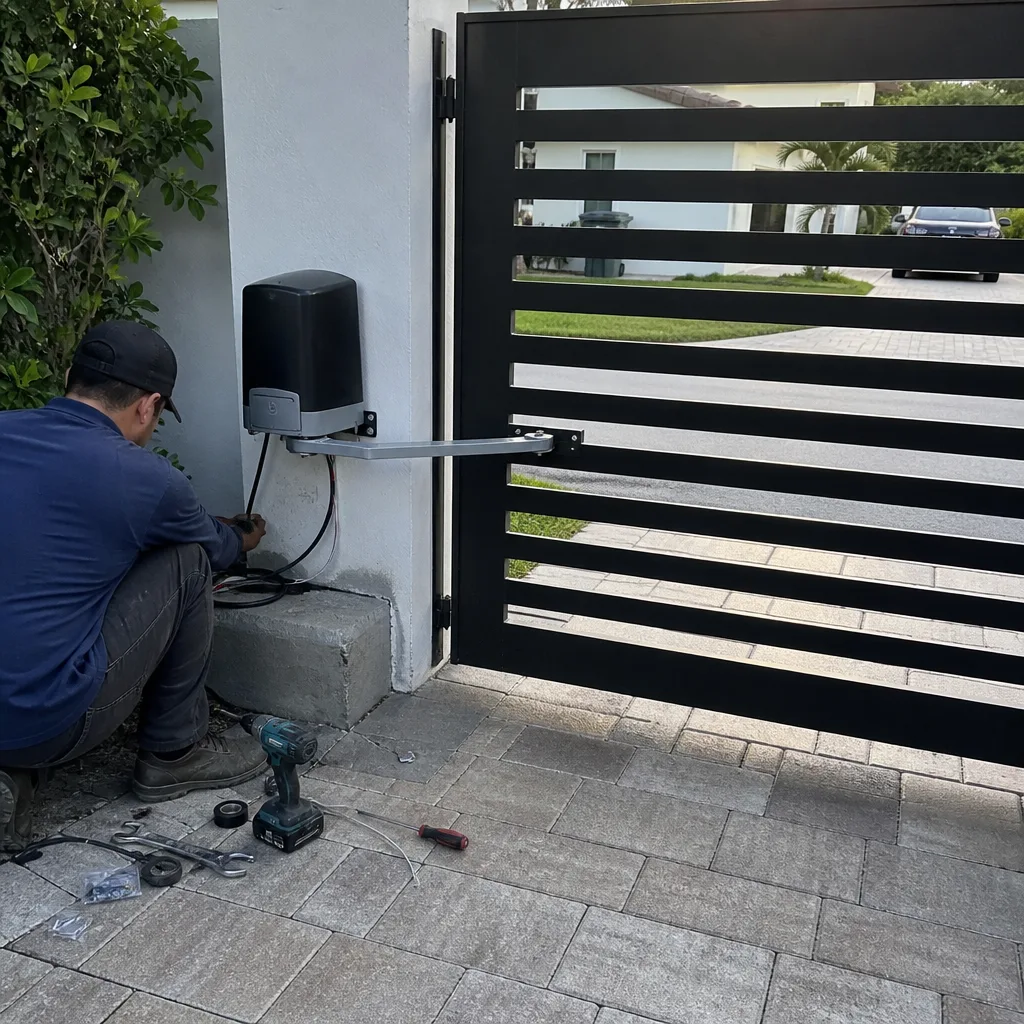 After
After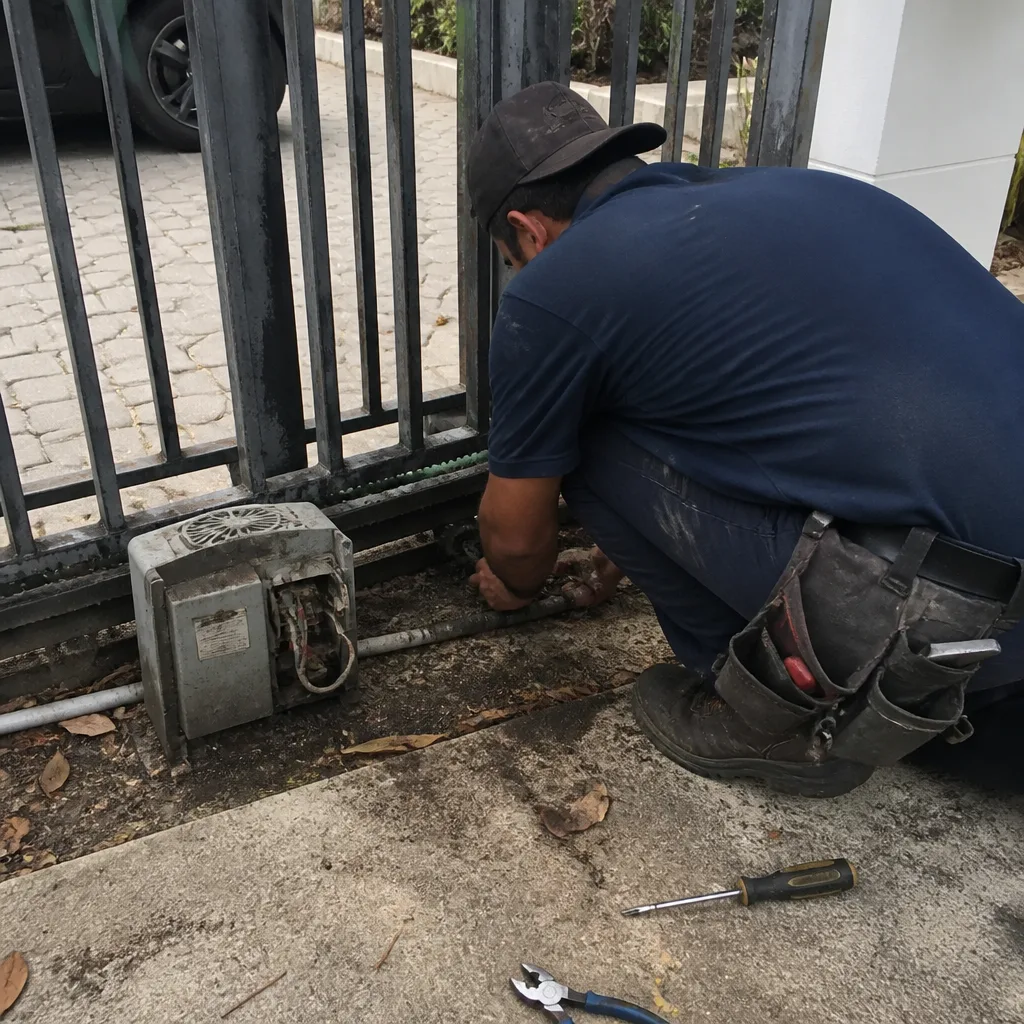 Before
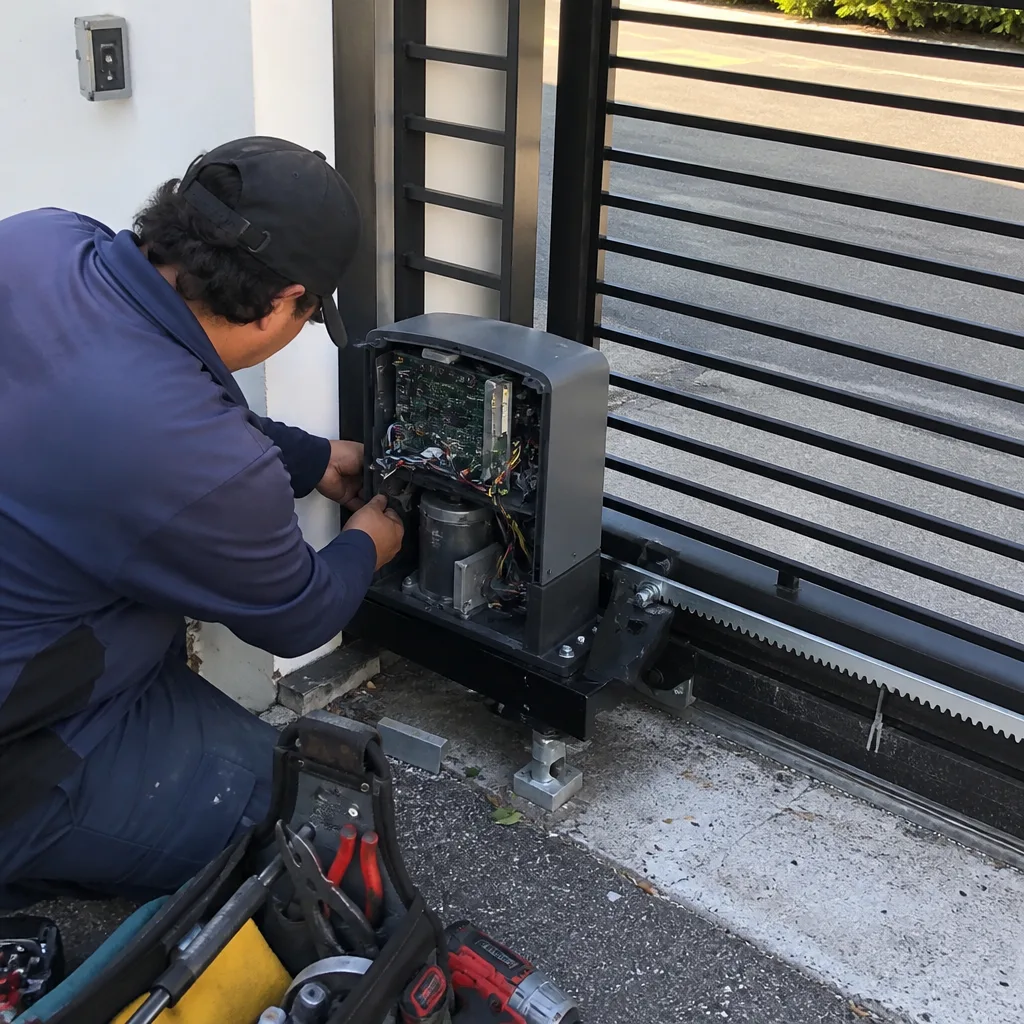 After
AfterSeasonal Gate Repair Care for Fort Lauderdale: Year-Round Homeowner’s Guide
Most gate failures in Fort Lauderdale don’t start the week they appear. They start months earlier, as a hairline crack in a motor housing or an eroded seal that nobody photographed. The majority of gate failures we see between June and September trace back to water infiltration that began as a small opening during the dry season. This guide explains how Fort Lauderdale’s two real seasons (dry and wet) damage gates in opposite ways, and what to check before each one arrives. You’ll learn inspection sequences, documentation habits, and the specific failure points most homeowners miss until the gate stops moving entirely.
Quick Answer
Seasonal gate care in Fort Lauderdale means two inspection cycles: a dry-season check (November through April) focused on rubber seals, weld cracks, and solar charging performance, and a pre-rainy-season check (April through June) focused on motor housing integrity, drain holes, and terminal corrosion. A homeowner can meaningfully inspect all of these items in about 20 minutes per cycle, using a flashlight, a phone camera, and a length of string to check gate travel. If anything looks cracked, corroded, or water-stained, schedule Gate Repair services before the weather changes.
Table of Contents
- Why Fort Lauderdale’s Two Seasons Damage Gates Differently
- Dry Season Checklist: November Through April
- Pre-Rainy Season Checklist: April Through June
- How Hurricane Season Affects Gate Sensors and Operation
- Post-Storm Inspection Protocol for Broward County Homes
- How to Document Gate Condition Photographs Year Over Year
- Common Mistakes to Avoid
- When to Call a Professional
BeforeAfterWhy Fort Lauderdale’s Two Seasons Damage Gates Differently
Fort Lauderdale has two real seasons: dry season from November through April, and rainy season from May through October. The dry season isn’t just low rainfall; it’s low relative humidity, often dropping below 50% for weeks at a time. That pulls moisture out of rubber compounds, shrinking seals and making them brittle. Any rubber that was barely sealing a gap in October will be visibly cracked by February. When rainy season starts in May, those same cracks become water channels into the motor housing and control board. The dry season created the opening; the wet season exploited it.
The wet season brings a different problem: water accumulation. A gate motor bolted to a post sits in humid air nearly year-round, but sustained rain creates standing water at the base of the post, rising damp inside underground conduit, and condensation inside electronics housings whenever the sun comes out and heats the enclosure. We’ve opened motor housings in Fort Lauderdale neighborhoods like Victoria Park and Rio Vista where the corrosion on terminal strips was so complete that the wire colors were no longer visible. That’s not a one-day failure; it’s a three-month process.
Understanding this two-season cycle is the entire framework for the maintenance plan below. Nothing about Fort Lauderdale gate care needs to follow a calendar imported from temperate states. The gate doesn’t care what month it is. It cares whether the air is dry and pulling moisture out of rubber, or wet and pushing moisture into electronics.
If you’ve had a repair done recently, Gate Repair in Fort Lauderdale covers the full scope of gate repair services and what a proper diagnostic visit includes.
Dry Season Checklist: November Through April
The dry season is when rubber components tell you exactly where water will enter during the wet season. The checklist below follows the gate from the post outward, the same order a technician uses when servicing gate motors and openers in the field. The entire inspection takes under 20 minutes and requires no specialized tools.
Step 1: Inspect All Rubber Seals and Gaskets
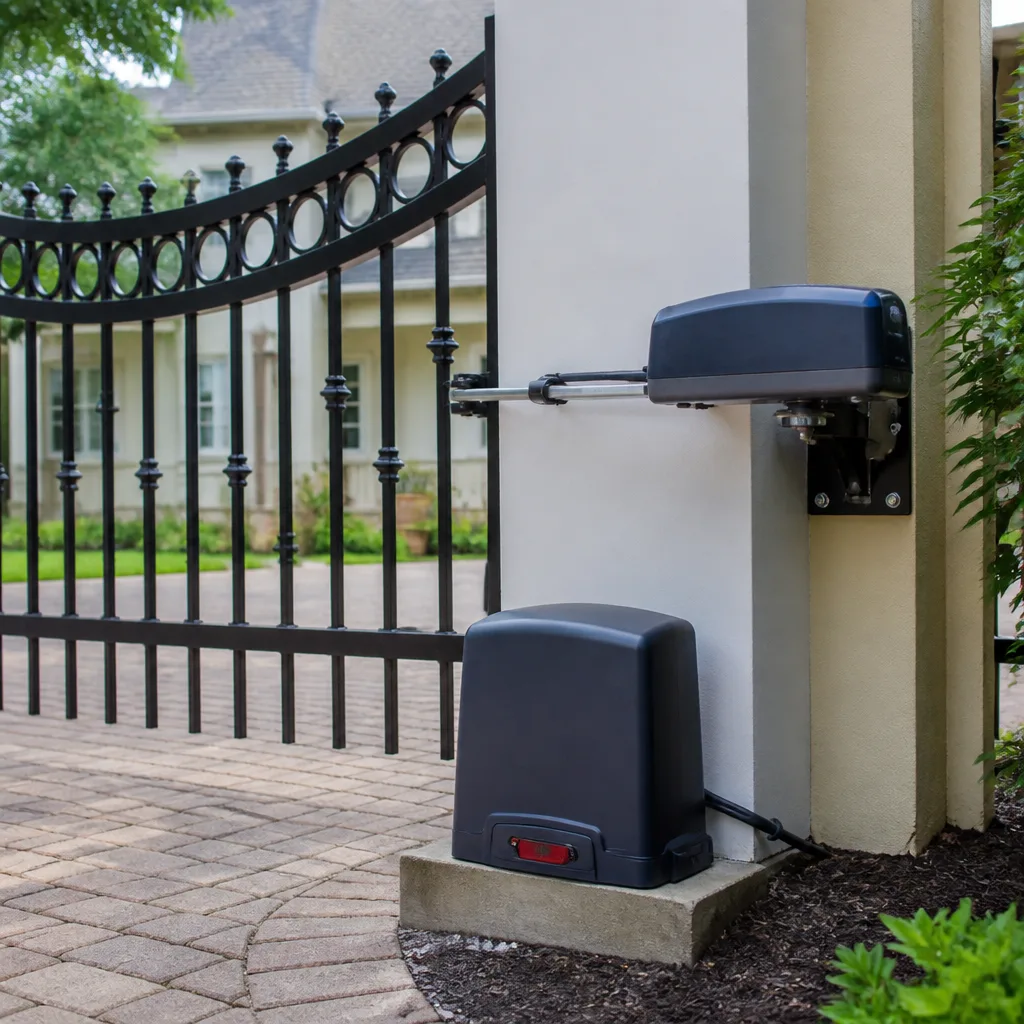
- Open the motor housing cover (power off, breaker off). Locate the rubber gasket that runs around the edge of the housing.
- Run your fingertip along the gasket. What you’re checking for is hardening: rubber that feels more like plastic than eraser. In Fort Lauderdale dry-season conditions, gaskets can harden in a single season when exposed to direct afternoon sun.
- Look for any area where the gasket is no longer taking the shape of the housing edge when the cover closes. A gap of even 1/8 inch allows driven rain into the housing during a summer storm.
Step 2: Inspect Welds on Swing Gate Hinges and Slide Gate Tracks
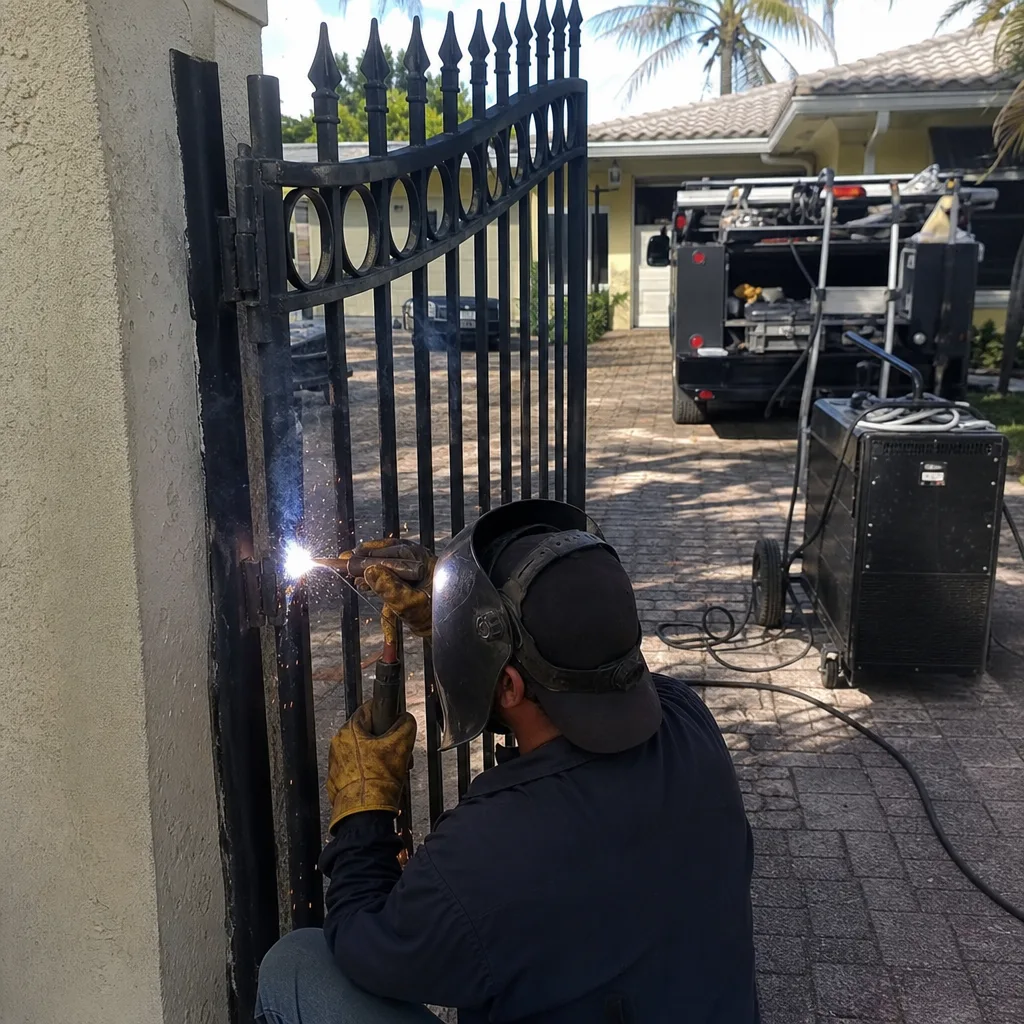
Dry season is when hairline weld cracks appear, particularly on swing gates where the hinge plate meets the gate frame. The cyclical expansion and contraction of metal under daily temperature swings gradually opens micro-fractures. You won’t feel a 1-inch crack, but you can see it if you’re looking. Shine a flashlight across the weld at a shallow angle; a hairline crack catches the light as a thin shadow. The lower hinge on every swing gate is the highest-stress point on the entire structure.
Step 3: Check Solar Charging Performance (Solar-Equipped Gates Only)
Low humidity usually means clear skies, which is good for solar panels, but dry season dust accumulation on a flat panel surface can reduce charging output noticeably. Wipe the panel with a damp cloth and check the charge controller’s indicator lights. If the battery voltage reads below 12.4 volts on a sunny afternoon, the panel or controller is degrading. A gate that only gets 11.7 volts at the battery will operate but never complete a full charge cycle, and the battery will gradually sulfate. Solar systems also benefit from the same terminal inspection described in the pre-rainy season section below.
Step 4: Lubricate, Then Clean the Excess
Applying a light coat of lithium grease to hinge pins and slide gate rollers during dry season is useful, but the more important step is removing the old grease and debris that accumulated during the previous rainy season. Wipe the surfaces clean first, then apply fresh lubricant. Grease that has picked up sand and salt acts as a grinding paste on the hinge pin, and Fort Lauderdale’s coastal air deposits salt on every exposed metal surface.
Pre-Rainy Season Checklist: April Through June
This is the more urgent of the two checklists. Everything found here is either fixed now or paid for when the first named storm passes over Broward County. The checklist focuses on water ingress and electrical connections, because that’s where rainy season failures begin.
Step 1: Motor Housing Inspection
Remove the motor housing cover and inspect the interior with a flashlight. Look for any sign of previous water entry: rust staining, water marks on the inside of the cover, or corrosion staining around the bottom of the housing. If you see even a faint water line, water entered during some previous storm. The entry point is usually one of three places: the gasket (dry season damage), the cable entry fitting (conduit not sealed), or a cracked housing from impact or UV embrittlement.
Step 2: Drain Hole Clearing
Most motor housings have small drain holes at the lowest point of the enclosure, designed to let condensation escape. Those holes clog with dirt, dead insects, and dust during the dry season. Use a stiff wire or pipe cleaner to clear each hole. A housing that can’t drain condensation will accumulate standing water inside, and the control board sits inches above that water. It only takes a quarter inch of standing water in a tilted housing to submerge low-mounted terminal strips.
Step 3: Terminal Corrosion Assessment
With the power still off, examine the terminal strips where low-voltage wires (keypad, photo-eye, safety edge) connect to the control board. Green or white crust on a terminal is copper corrosion, which increases electrical resistance. Resistance causes heat; heat accelerates corrosion; the connection eventually fails open. If any terminal shows visible corrosion, it should be cleaned and re-terminated, and any wire with corrosion wicking up the strands should be cut back to clean copper. In Fort Lauderdale’s humidity, this is the single most common cause of intermittent gate opener failure we see on service calls, especially on motors from brands like Linear and Viking that ship with steel terminal screws.
Step 4: Photo-Eye Alignment and Test
Run the gate through a full open and close cycle while holding a 6-inch piece of cardboard across the beam path at knee height. The gate should stop and reverse immediately when the beam is interrupted. If it doesn’t, the photo-eye is either misaligned or failing. Dry season ground settling shifts posts and concrete pads, and a photo-eye that was aligned in November may be several degrees off by April. Misalignment reduces the beam’s range and increases false-positive triggers during heavy rain, when water droplets scatter the beam.
How Hurricane Season Affects Gate Sensors and Operation
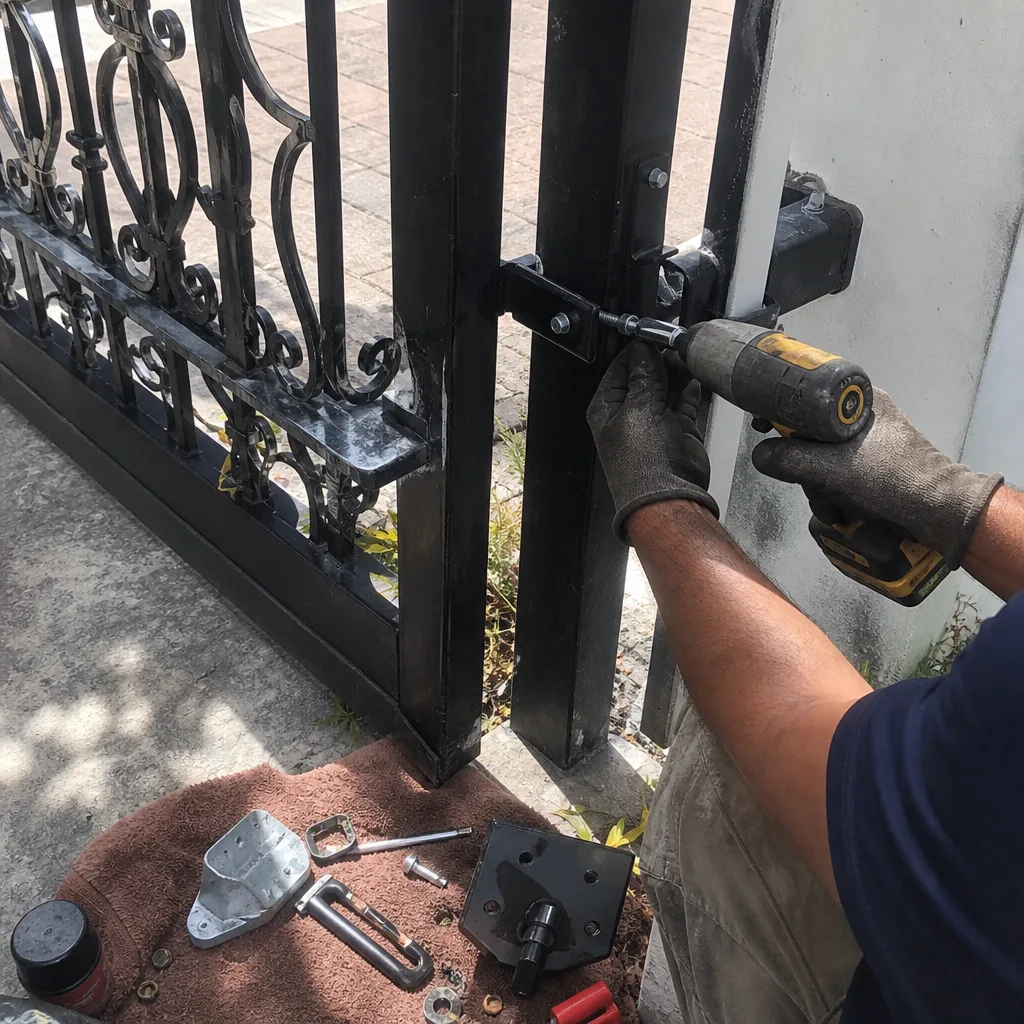
Wind Pressure and Photo-Eye Mounts
Hurricane-force wind gusts load a gate leaf like a sail. A 16-foot swing gate in 60 mph wind produces hundreds of pounds of force at the hinge, but more critically, it flexes the gate frame and every mounting surface attached to it. A photo-eye bolted to a brick column will shift position when the column moves, and in a fast-moving storm the column does move. After any high-wind event, photo-eye alignment should be checked before the gate is relied upon for closing.
Storm Shutters and Gate Sensor Interference
Most homeowners don’t anticipate this interaction: reflective storm shutter surfaces can deflect the photo-eye beam back toward the receiver at an angle, giving a false “beam intact” reading and allowing the gate to close on a vehicle. Corrugated metal shutters are particularly reflective. If the gate path is adjacent to a stucco or masonry wall that gets covered in accordion shutters during a storm, the reflected beam can be strong enough to satisfy the receiver. The same applies to reflective safety vests on workers, bicycle reflectors, and even glossy vehicle paint in direct sun. After shutters are deployed, test the photo-eye with an actual obstruction, not just with the system’s own indicator light.
Power Interruption and Battery Backup Behavior
Gate motors in Fort Lauderdale are commonly equipped with battery backup, and many homeowners assume the battery backup means the gate will function during a power outage. It will, but only if the battery is in good condition. After 18 to 24 months of Fort Lauderdale heat, most gate batteries are only holding a partial charge, and a partial battery will open the gate but not necessarily hold enough power to complete a full cycle. After the storm passes and line power is restored, cycle the gate on battery alone once (with the breaker off) and time it. If the gate is noticeably slower on battery, the battery is on its way out. That’s the time to replace it, not during the next power outage when the gate is the only way to get the car out.
Post-Storm Inspection Protocol for Broward County Homes
After any named storm passes through Fort Lauderdale, run this sequence before using the gate in automatic mode. The order matters: structural safety first, then electrical function, then calibration.
The Post-Storm Inspection Order
- Visual structural check. Walk the full length of the gate and look for any new gap at a weld joint, any bent rail on a slide gate, and any separation between the gate frame and the post mount. Do not stand in the gate’s path while doing this.
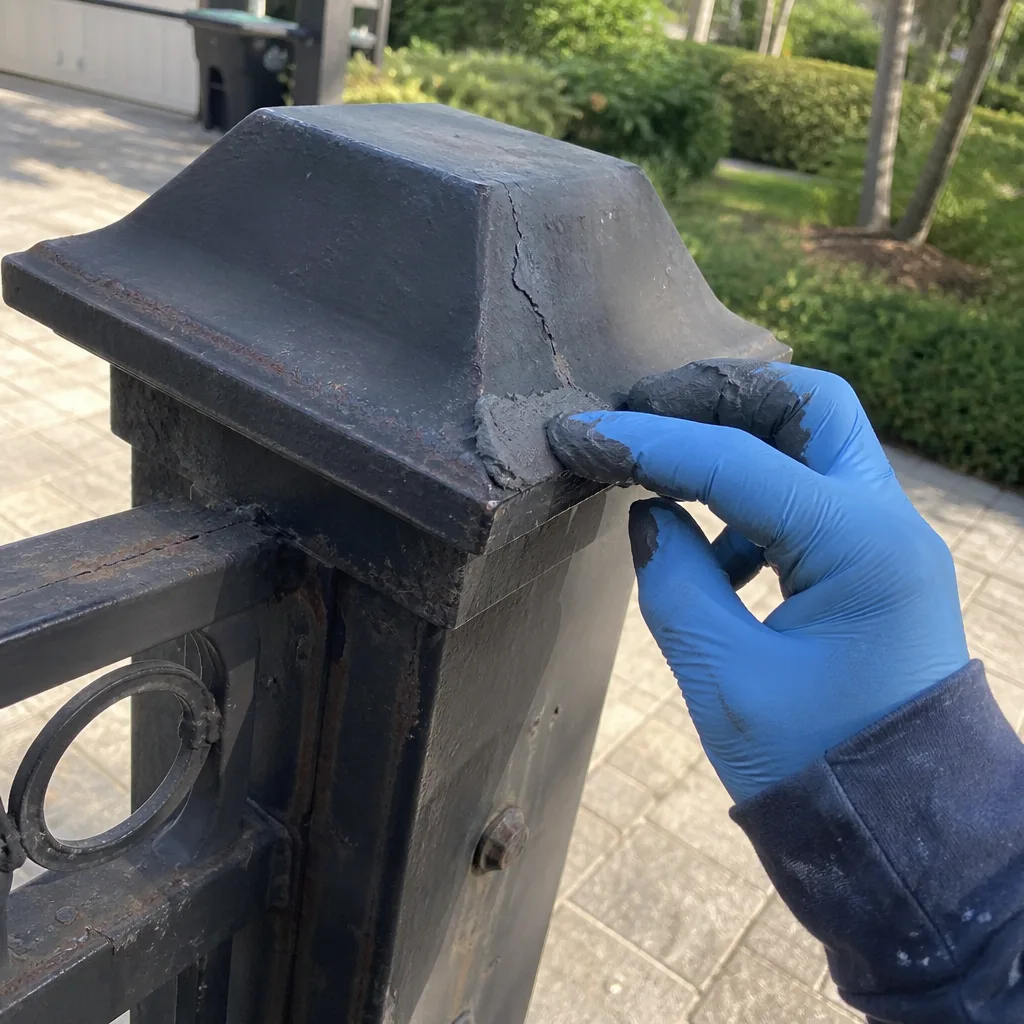
- Check the motor housing exterior. Look for impact marks, dents, or cracks that were not there before the storm. A branch striking a housing at speed creates a hairline crack that water will find.
- Check for debris in the track or swing path. Clear leaves, branches, and roofing material from the gate’s entire travel path before attempting operation. A single branch in the track can shear a gearset.
- Cycle the gate manually using the manual release. The gate should move smoothly with no new resistance or grinding. If it binds, stop and call a technician; don’t force it.
- Power on and test photo-eyes and safety edges with actual obstructions. Use a closed cardboard box for the photo-eye and a rolled beach towel for the safety edge.
- Photograph everything. Take one photo of the motor housing exterior, one of the terminal strip interior, one of each hinge or track section, and one full-width shot of the closed gate. These photos are the baseline for next year’s comparison.
If you’re unsure about any structural issue, Gate Installation in Fort Lauderdale covers what a proper installation includes, and can help you tell the difference between a repairable issue and a structural replacement decision.
How to Document Gate Condition Photographs Year Over Year
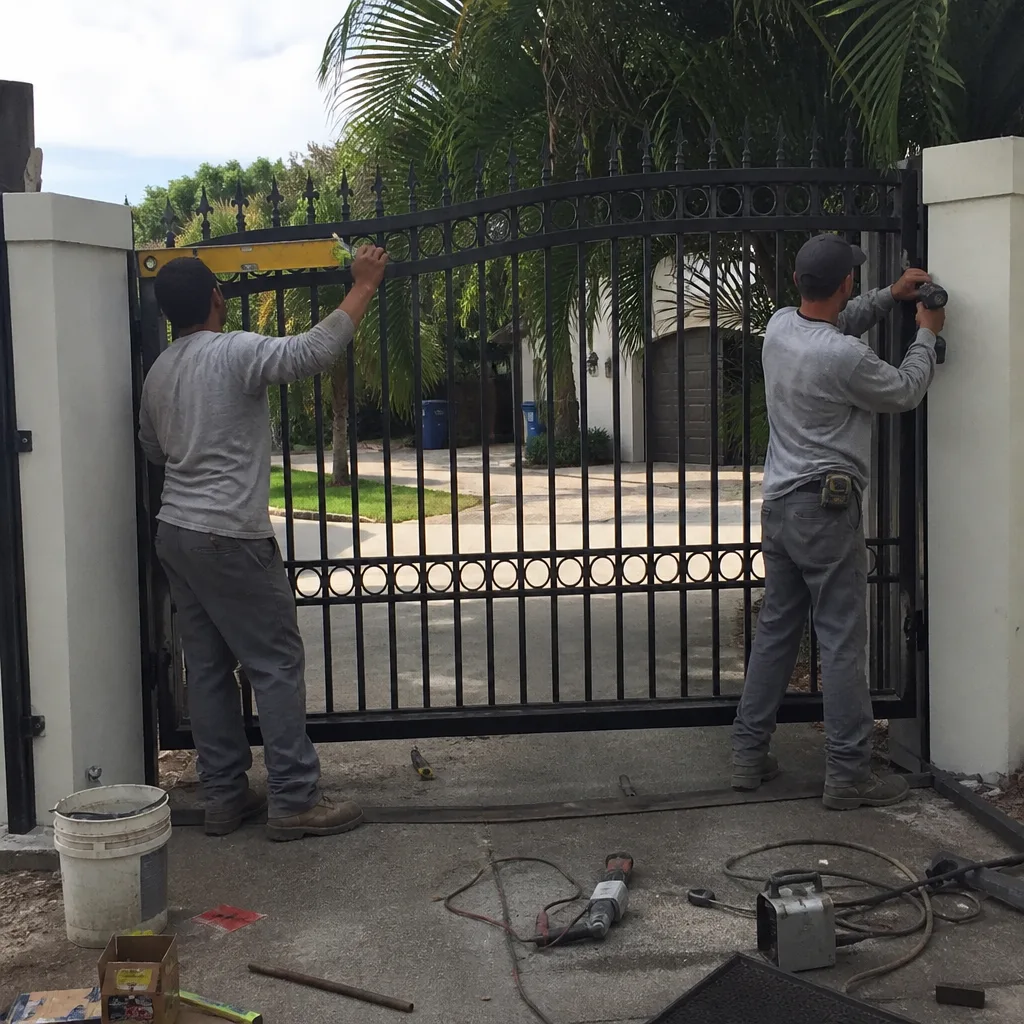
The single most useful habit a Fort Lauderdale homeowner can develop is taking a fixed set of gate photographs on a fixed schedule, twice a year. The value isn’t in any single photo. It’s in the comparison over time, which shows deterioration rate rather than a static snapshot. A small crack that was 1/4 inch in March and 3/4 inch in September is a progression; without the earlier photo, it’s just a crack.
The Seven-Photo Set
- Full gate, closed, from the outside approach
- Full gate, open, from the inside
- Each hinge or track roller assembly, close-up
- Motor housing exterior, including any hardware or antenna
- Motor housing interior (power off), showing the control board and terminals
- Photo-eye units, both sides
- Battery and charge controller (if visible)
Store these in a dedicated folder on your phone or cloud service named “Gate Inspection [Date].” Use the same angle and distance each time. The seven-photo set takes about five minutes to capture and creates a record that no inspection report could replace, because it shows exactly what the gate looked like at that moment. It’s a habit that mirrors what Vance Gate Repair Fort Lauderdale does on every service visit under The Haven Standard’s Clause 4: evidence on every job.
What the Photos Reveal Over Time
- Weld crack progression: a crack that doesn’t change between inspections is stable; one that grows is an active structural issue.
- Corrosion spread: terminal corrosion that advances across a terminal strip is a sign of water entry; corrosion that stays isolated is a one-time event.
- Rubber degradation: a gasket that looked pliable in November and cracked in April tells you exactly how fast the material is failing, and whether it’ll survive another rainy season.
- Track wear: roller tracks in Fort Lauderdale’s sandy environment wear unevenly; photos show the wear pattern developing before the gate starts binding.
Common Mistakes to Avoid
- Lubricating without cleaning first. Applying fresh grease over old rust and grime just traps abrasive particles against the moving surface. Clean the surface, then lubricate.
- Skipping the photo-eye test. Most homeowners only learn their photo-eye has failed when the gate hits something. A 20-second cardboard test identifies misalignment before it becomes a safety problem, and safety edges and photo-eyes are not optional components on an automatic gate.
- Operating the gate on battery backup after a storm without checking the battery first. A weak battery will open the gate but may stall on the close cycle, leaving the gate half-open and the house exposed.
- Ignoring drain holes. A clogged drain hole turns a properly sealed motor housing into a condensation chamber. Clear them every pre-rainy season inspection.
- Not photographing the condition before and after a storm. Post-storm insurance claims and warranty disputes are far easier when you can show exactly what changed. Fort Lauderdale homeowners who photograph regularly recover faster from damage events.
- Assuming the gate is fine because it still opens. Gates are built to fail gradually. The motor and gearset are compensating for a binding hinge or a degrading battery long before the gate stops. The point of seasonal inspection is to catch the compensation, not the failure.
When to Call a Professional
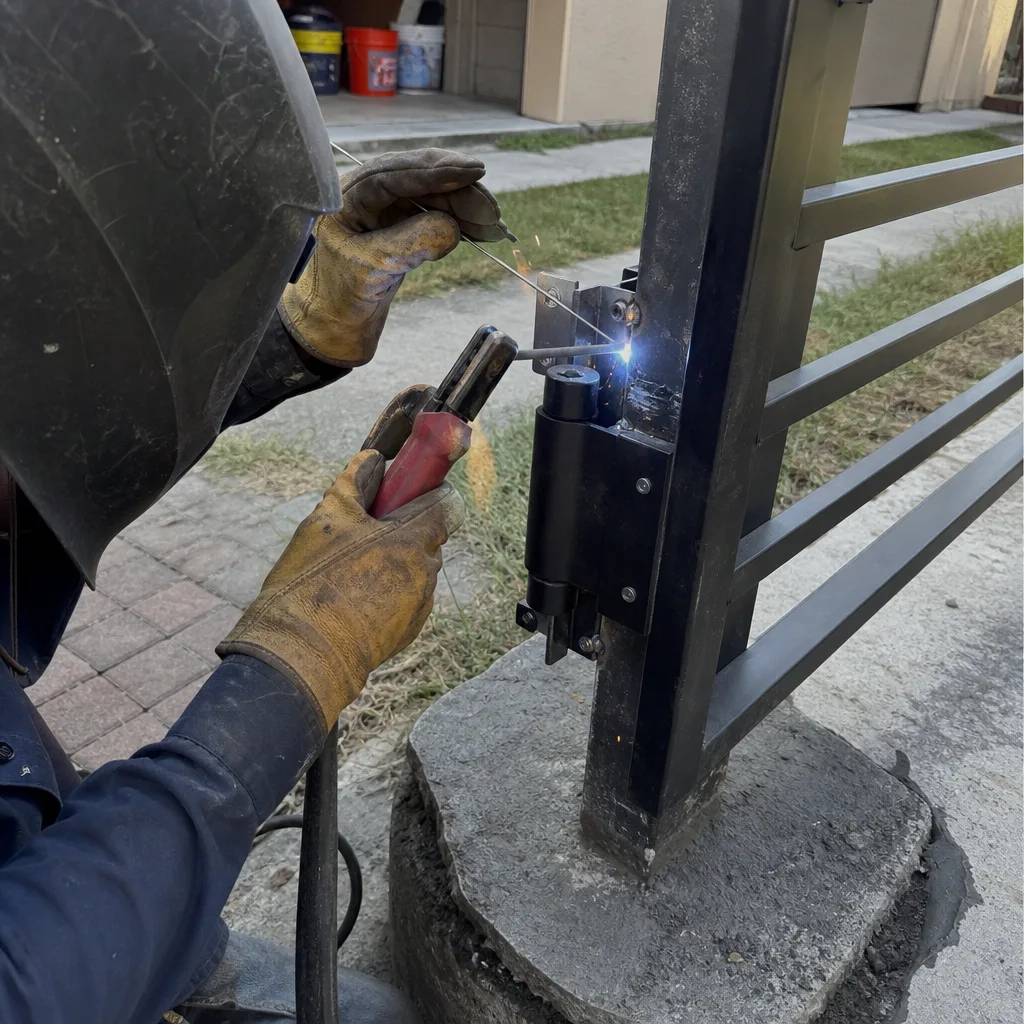
Some seasonal inspection findings are addressable by a careful homeowner with basic tools: wiping a solar panel, clearing debris, photographing a housing. Others require a trained technician with a multimeter, spare parts, and experience with gate motor brands like Ghost Controls and DoorKing, as covered in our DIY vs Professional Gate Repair: The Fort Lauderdale Homeowner’s Decision Guide. Call a professional if you find: visible terminal corrosion requiring wire re-termination; a motor that trips a breaker or GFCI; any structural weld crack or bent track section; a gate that operates normally but makes a new grinding, scraping, or laboring sound; or a battery that cannot complete a full open-close cycle on its own. Vance Gate Repair Fort Lauderdale offers free estimates in Fort Lauderdale, including a written price before any work begins. Call (754) 399-1474.
Frequently Asked Questions
Twice a year, once in the dry season (November through April) and once before the rainy season (April through June). The two inspections address different types of damage: dry season inspections catch seal and weld cracking, while pre-rainy season inspections catch anything that would admit water into the motor housing. If you only inspect once a year, make it the pre-rainy season check. - Call (754) 399-1474 if your inspection turns up anything you’d like us to evaluate.
A professional seasonal maintenance visit in Fort Lauderdale typically runs between $85 and $200, depending on whether it includes parts like gaskets, terminal cleaning, and adjustments to the motor’s limit settings. Gate Motor & Opener in Fort Lauderdale service includes the same diagnostic process and documentation. The most useful investment is a written condition report with photos, which covers everything a future technician would need to know. Exact pricing is always quoted in writing before any work starts.
You can and should do the visual and functional inspections described in this guide: checking seals, clearing drains, wiping solar panels, testing photo-eyes, and photographing everything. What you should not do yourself is re-terminate corroded wires, replace a motor capacitor, adjust a torsion spring on a swing gate, or open a control board enclosure if you’re not comfortable around live 120V connections. - For anything electrical or structural, call (754) 399-1474 for a free estimate.
Coatings near the coast in Fort Lauderdale fail faster than inland, plain and simple. Salt air accelerates oxidation on every exposed metal surface, and the damage is usually concentrated at the bottom hinge and the track rollers where salt-laden moisture collects. A gate with powder-coated steel may look intact while the internal hinge pin is corroding. The inspection protocol in this guide includes salt-focused checks on hinges, tracks, and terminal strips. - If you see rust staining or pitting, call (754) 399-1474 for an assessment.
There’s no universal answer, but the safest default for a swing gate in Fort Lauderdale is to leave it closed and mechanically locked or pinned, with the motor disconnected and the manual release engaged so wind can’t back-drive the gearset. For slide gates, engaging the manual release and manually latching the gate in place is the most reliable approach. The priority is to prevent wind damage to the motor and gearset by letting the gate leaf move freely into its stops, rather than having the motor fight the wind. - For a specific recommendation on your gate, call (754) 399-1474.
Run the gate on battery power alone by switching off the breaker and cycling the gate open and closed. If the gate is noticeably slower than when it runs on line power, or the battery voltage reads below 12.4 volts after a full charge cycle, the battery is degrading and should be replaced before the next hurricane season. Batteries in Fort Lauderdale’s heat typically last 18 to 24 months. - For battery testing and replacement, call (754) 399-1474 for a free estimate.
The Bottom Line
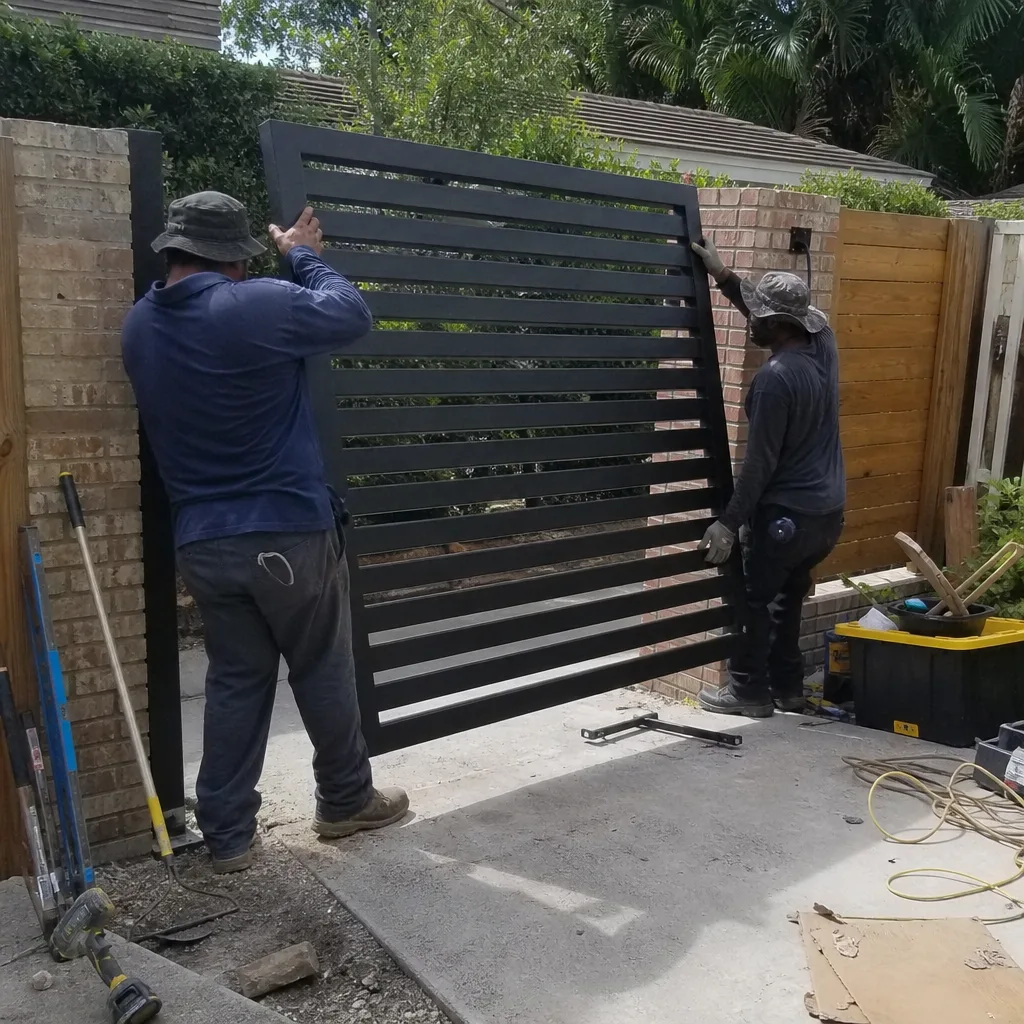
Fort Lauderdale gate maintenance is a two-season discipline. Dry season is for catching damage before it opens a water path; rainy season is for sealing every possible water entry point before the storms arrive. A homeowner who runs both inspection checklists and keeps a consistent photo record will catch most gate failures months before they happen, and will have documentation that makes any professional repair faster and less expensive. See The Complete Guide to Gate Repair in Fort Lauderdale for deeper troubleshooting steps. The most important behavior isn’t technical skill; it’s consistency. Inspect twice a year, photograph every time, and call (754) 399-1474 when an inspection turns up something you’d rather not diagnose on your own.
Written by Adrian Vance, Owner at Vance Gate Repair Fort Lauderdale, serving Fort Lauderdale since 2014.