
Last updated September 20, 2026
Free on-site gate assessment - hinges, posts, and your LiftMaster or Nice gate operator checked before anything is quoted
The assessment is free and the quote is the invoice.

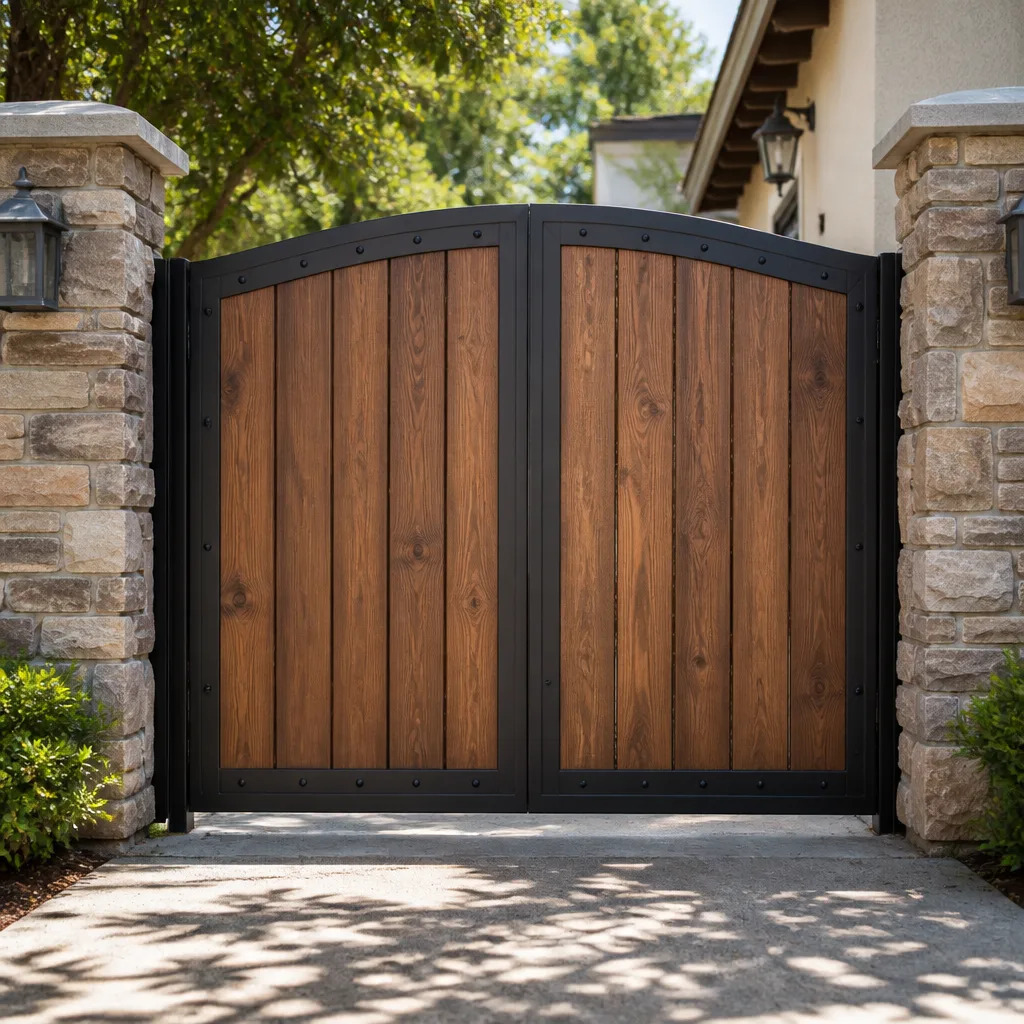
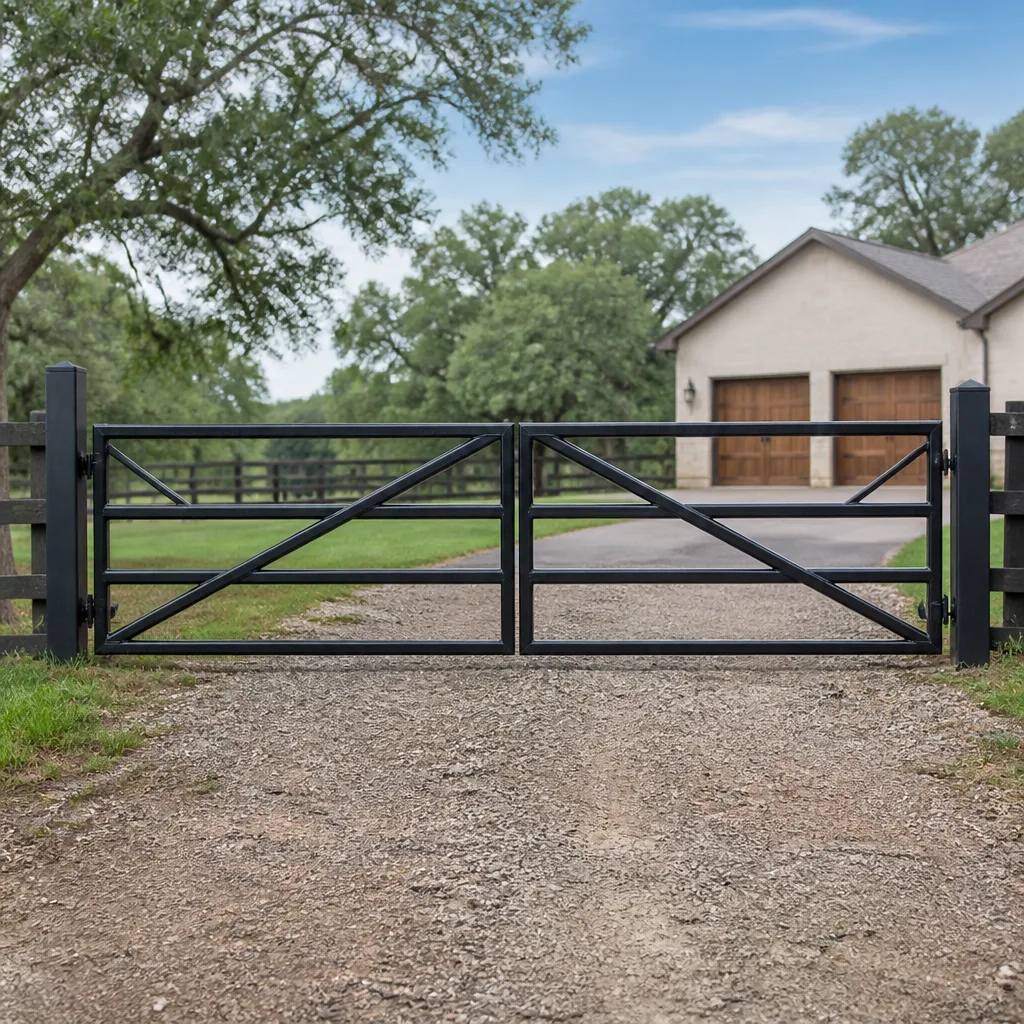
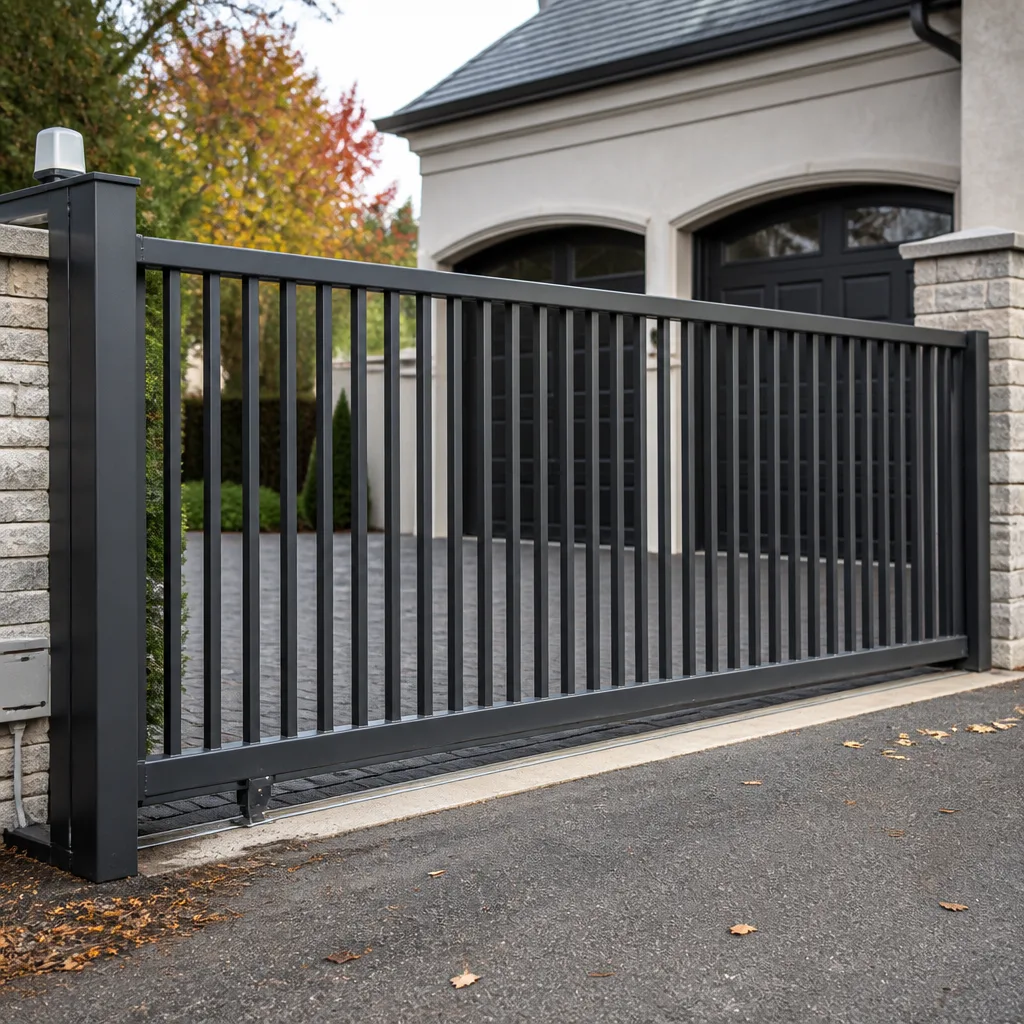
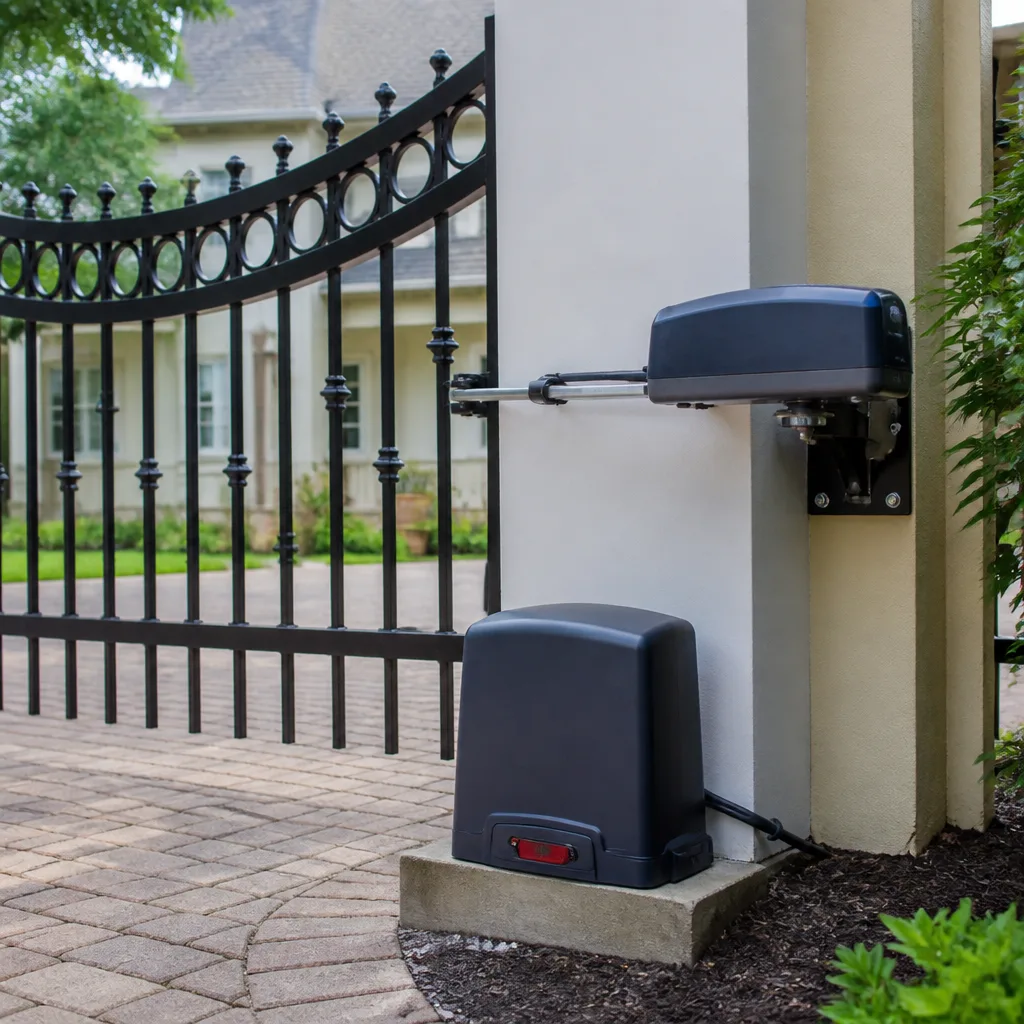
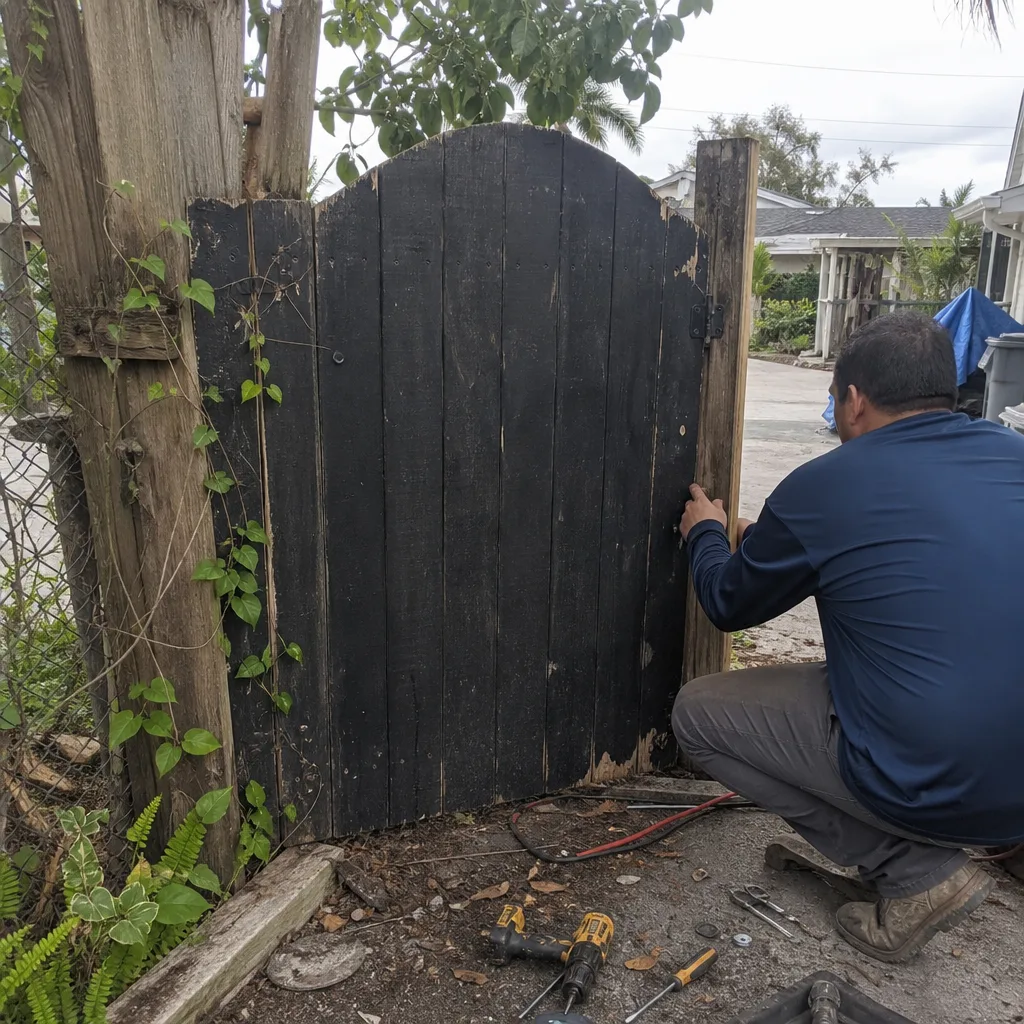 Before
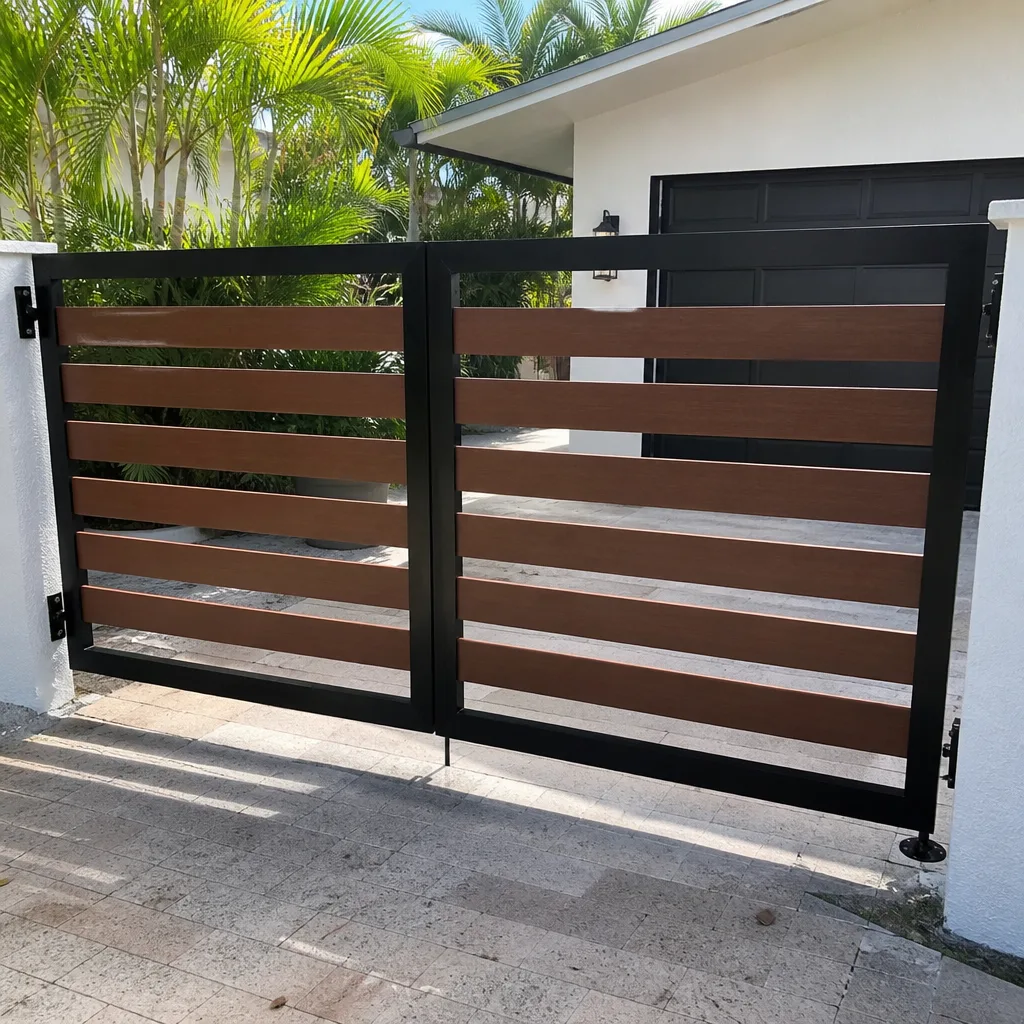 After
After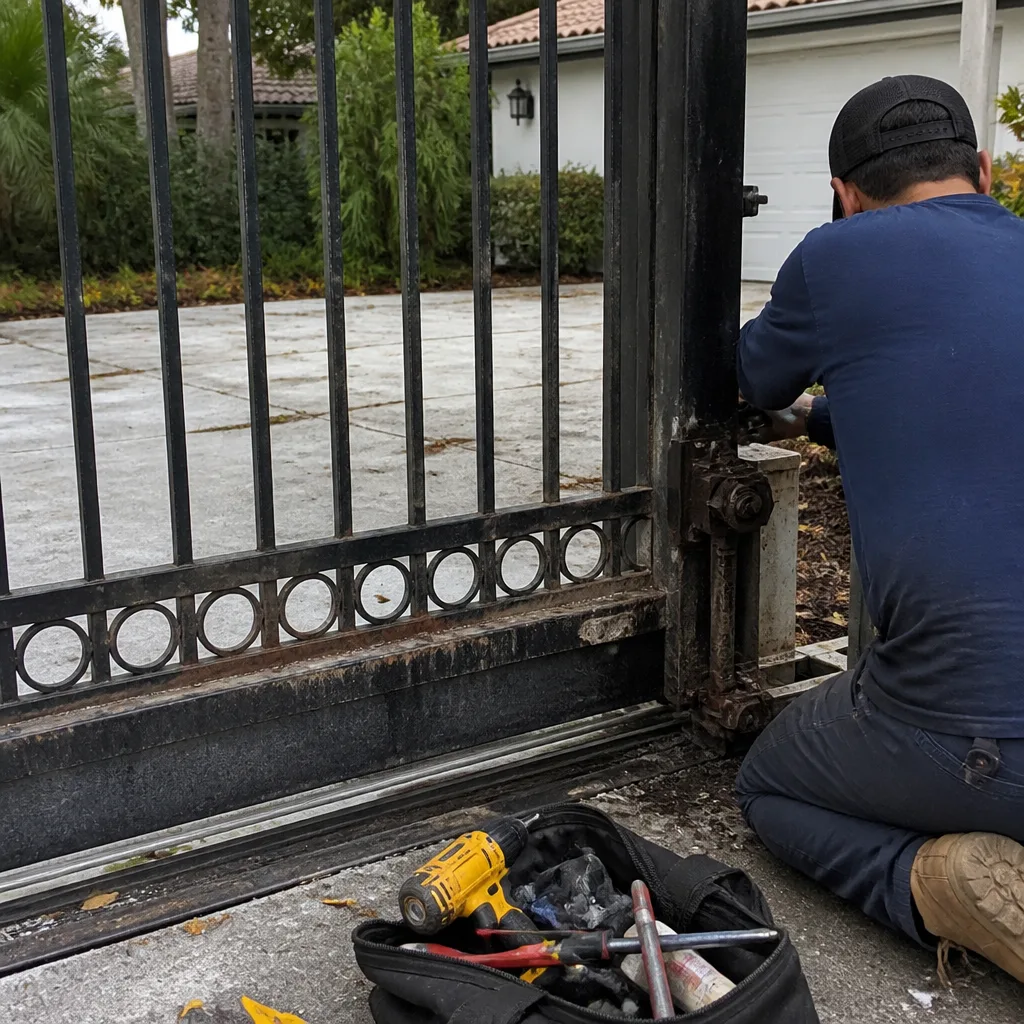 Before
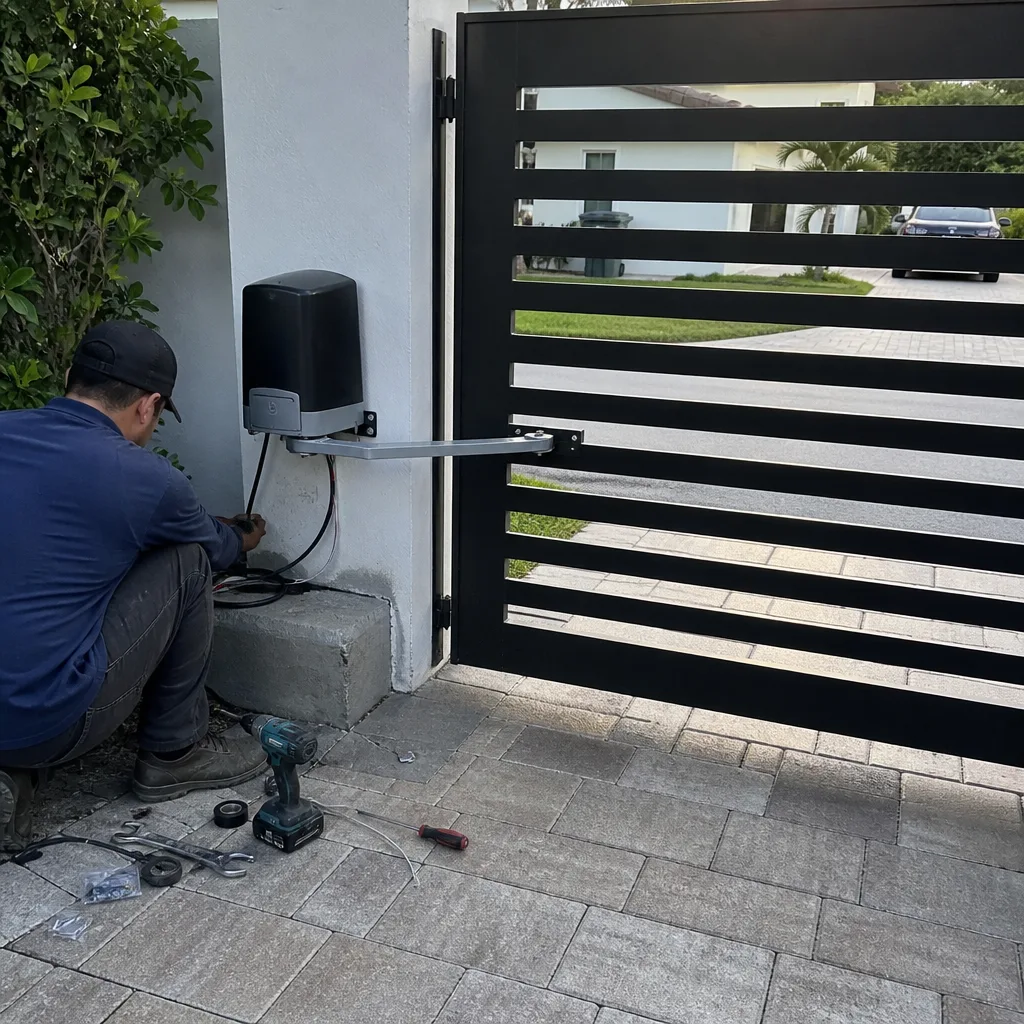 After
After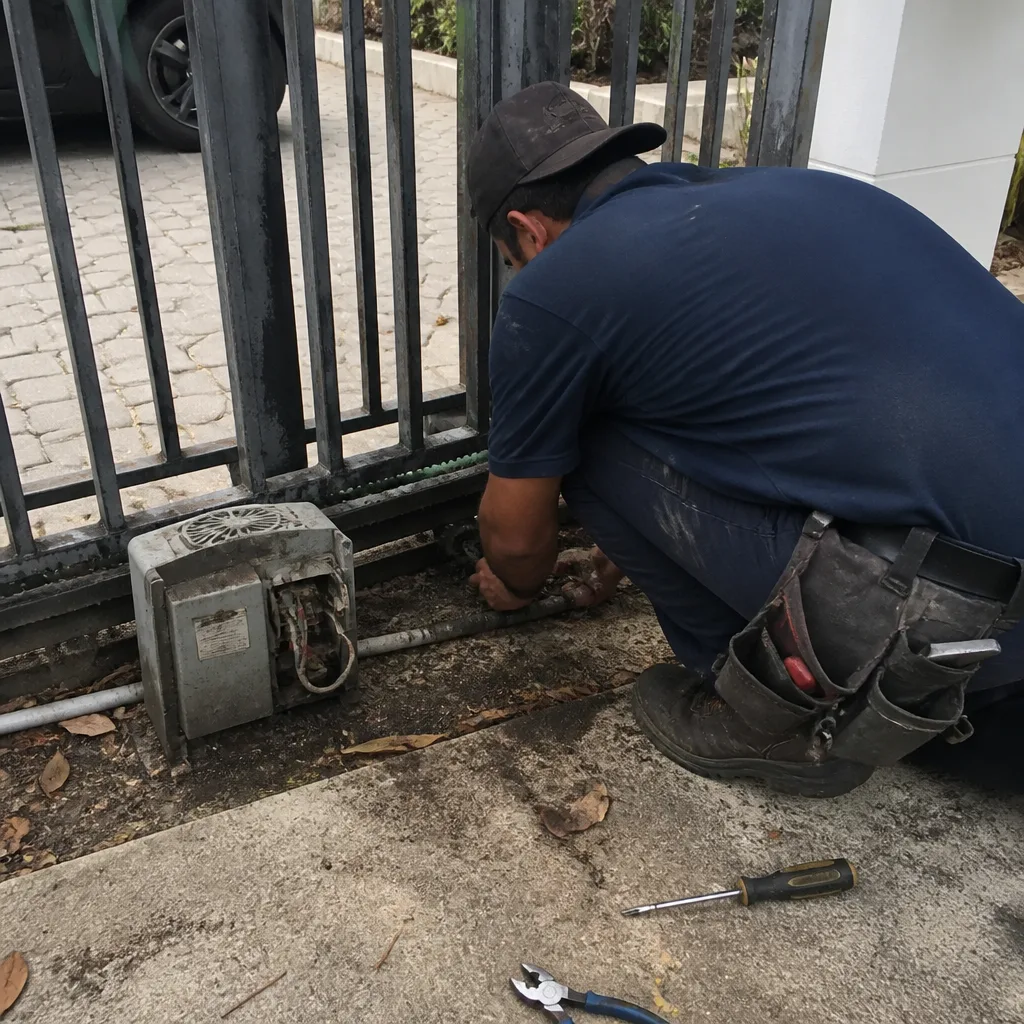 Before
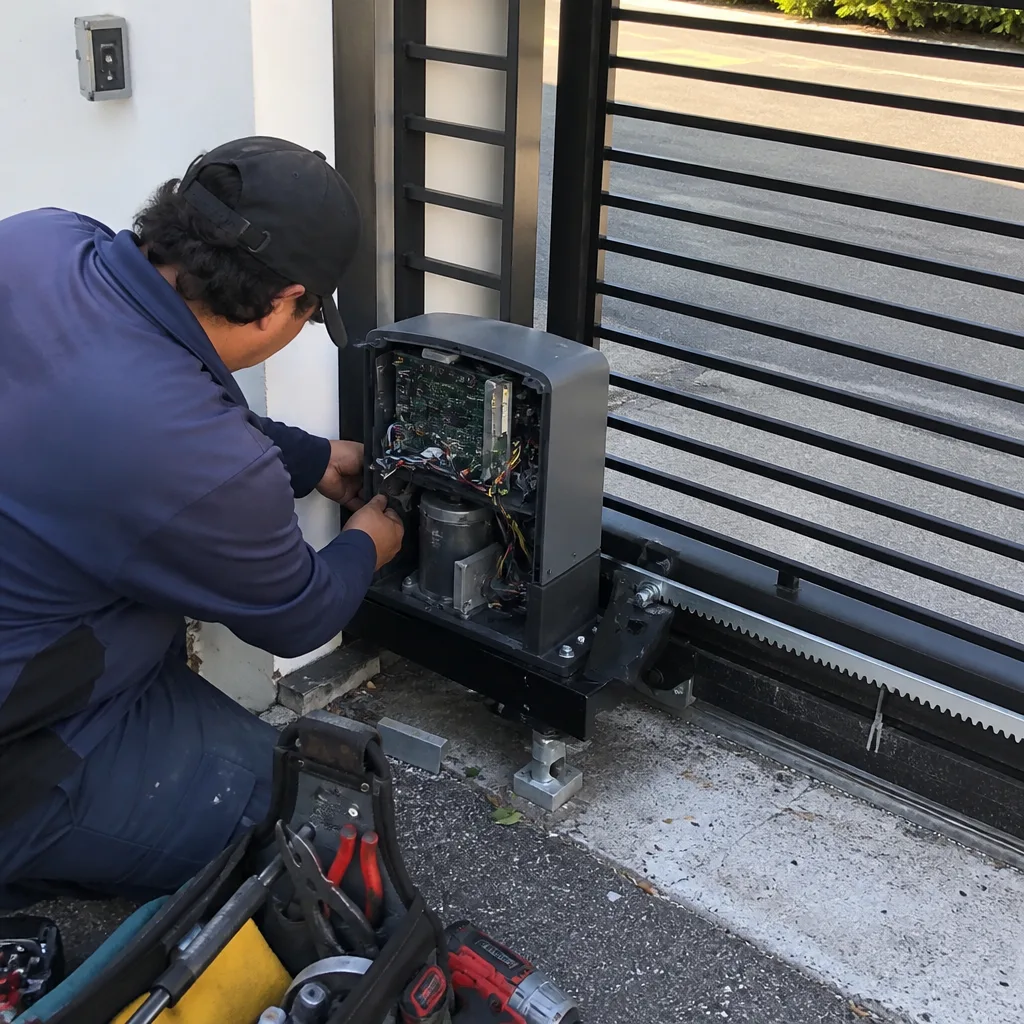 After
AfterGate Repair Permits, Codes & Inspections in FL: What You Need to Know
Most homeowners in Florida don’t discover they needed a permit for gate work until the title company finds it during a sale. That’s not a hypothetical. A homeowner in Fort Lauderdale had a gate operator replaced without a permit in 2023, then watched closing slip three weeks while the unpermitted electrical connection went through retroactive inspection and remediation. This guide spells out exactly when gate work triggers a permit in Broward County, what inspectors actually check, how HOA covenants layer on top of municipal code, and what unpermitted work costs you when you sell. For more guides & resources, see our blog.
Quick Answer
In Fort Lauderdale and across Broward County, a gate repair that replaces broken hardware like hinges, wheels, or a control board on a like-for-like basis typically does not require a permit. The line is electricity. If the work touches the operator’s power feed, adds a new circuit, moves an outlet, or changes the operator type entirely, you are now in electrical permit territory. A brand-new gate installation with an automated operator almost always requires both a building permit and an electrical permit. If the repair is mechanical only and the operator stays wired exactly as it was, you are generally clear.
Table of Contents
- Florida Building Code and Where Gate Permits Come From
- The Broward County Threshold: Mechanical Repair vs. Electrical Work
- Like-for-Like Replacement: What It Is and Why It Matters
- The HOA Layer: Covenants That Run Parallel to County Code
- New Gate Installation vs. Repair: Two Different Permit Processes
- What a Final Inspection Actually Checks on a Gate
- How Unpermitted Gate Work Appears in Title Searches
- Remediation Costs Before a Property Transfer in Fort Lauderdale
BeforeAfterFlorida Building Code and Where Gate Permits Come From
Florida operates under a single statewide building code, the Florida Building Code (FBC), currently in its 8th edition as of 2024. Municipalities like Fort Lauderdale adopt the FBC as their baseline and may add local amendments. That means the permit requirement for a gate is the same in Fort Lauderdale as it is in Plantation or Davie unless a city has specifically amended the relevant chapter.
The FBC does not have a chapter titled “gates.” Gate work sits at the intersection of three code sections:
- Chapter 1 (Administration) defines when a permit is required for any construction or alteration.
- Chapter 27 (Electrical) adopts the National Electrical Code (NEC) with Florida amendments and covers the operator’s power supply, wiring methods, disconnects, and ground-fault protection.
- Chapter 16 (Structural) applies when a gate involves a foundation, a concrete pad, masonry columns, or significant framing.
In practice, the electrical chapter is the one that matters for most gate operators. A gate motor is an appliance. Appliance-replacement work often avoids permits. But the moment the work involves running a new branch circuit, extending an existing circuit, relocating a receptacle, or converting from 120-volt to 220-volt service (or adding a battery backup with a hardwired charger), the work falls under NEC scope, and Broward County’s Building Code Services Division expects a permit.
The Broward County Threshold: Mechanical Repair vs. Electrical Work
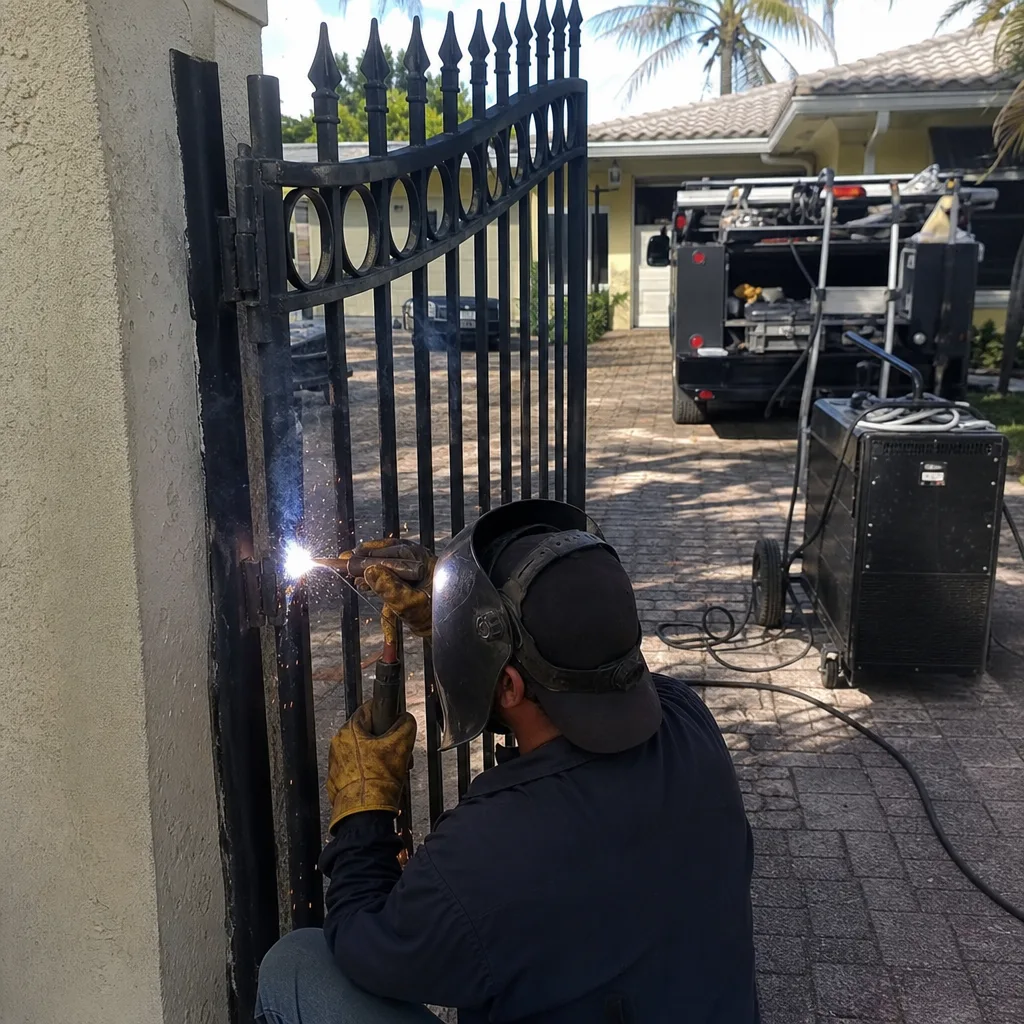
Here is the working line we use on every job in Fort Lauderdale, and it has held up through dozens of inspections: if the repair can be completed without disconnecting or modifying the line-voltage side of the operator, it is a mechanical repair and no permit is required. If the repair touches line voltage, the permit question is live.
Let’s make that concrete.
No permit needed (mechanical repair):
- Replacing a snapped chain on a slide gate
- Replacing hinges, weld repairs, or rack teeth on a swing gate
- Replacing a photo-eye, edge sensor, or keypad on the low-voltage side
- Replacing a control board inside the operator housing using the existing connectors
- Replacing a battery in a solar operator
- Adjusting limit switches, force settings, or closing speed
Permit required (electrical work):
- Running a new circuit from the panel to the gate operator
- Replacing an operator that requires different voltage than the existing feed
- Adding a hardwired battery-backup system that ties into line voltage
- Moving or adding an outlet or disconnect at the gate location
- Adding a loop detector that connects to the operator’s line-voltage terminals
- Replacing an external disconnect switch or subpanel at the gate
Broward County’s Building Code Services Division has been consistent on this interpretation in recent years. Their inspectors do not want a permit application for a hinge replacement, and they do want one for a new buried electrical run. The difficulty is that many homeowners assume the operator swap is like swapping a ceiling fan. It is not when the wiring changes.
Like-for-Like Replacement: What It Is and Why It Matters
The permitting exemption most relevant to gate repair is called like-for-like replacement. The FBC’s exemption language, mirrored in Broward County’s administrative code, states that a permit is not required for the replacement of an appliance or fixture with one of similar capacity and configuration when no wiring modification is involved. It is why changing a light switch plate needs no permit. It is also why replacing a broken control board or a failed operator of the same voltage and current draw, using the same field wiring and same disconnect, often does not trigger an electrical permit.
Three conditions must hold simultaneously for like-for-like replacement to apply to a gate operator:
- Same voltage and ampacity. If the old operator was 120-volt and the new one is 120-volt, the existing branch circuit is adequate. If the new operator is 220-volt and the old feed is 120, a new circuit is required and the exemption dies.
- Same wiring configuration. The existing conduit, conductors, and disconnect are reused without alteration. No pulling new wire. No moving boxes. No splicing into circuits that serve other loads.
- Same physical location. The replacement operator mounts in the same footprint. Moving the operator from a pillar mount to a pad mount thirty feet away is an alteration, not a replacement, because the circuit must be extended.
In Fort Lauderdale, a city with thousands of homes behind automated gates, this like-for-like distinction is the difference between a same-day operator swap and a two-week process involving an electrical contractor, a permit application, and a final inspection. It is also the question title companies ask when they review prior work. If a previous repair looks like it crossed the like-for-like line without a permit, that repair becomes a title issue.
The HOA Layer: Covenants That Run Parallel to County Code
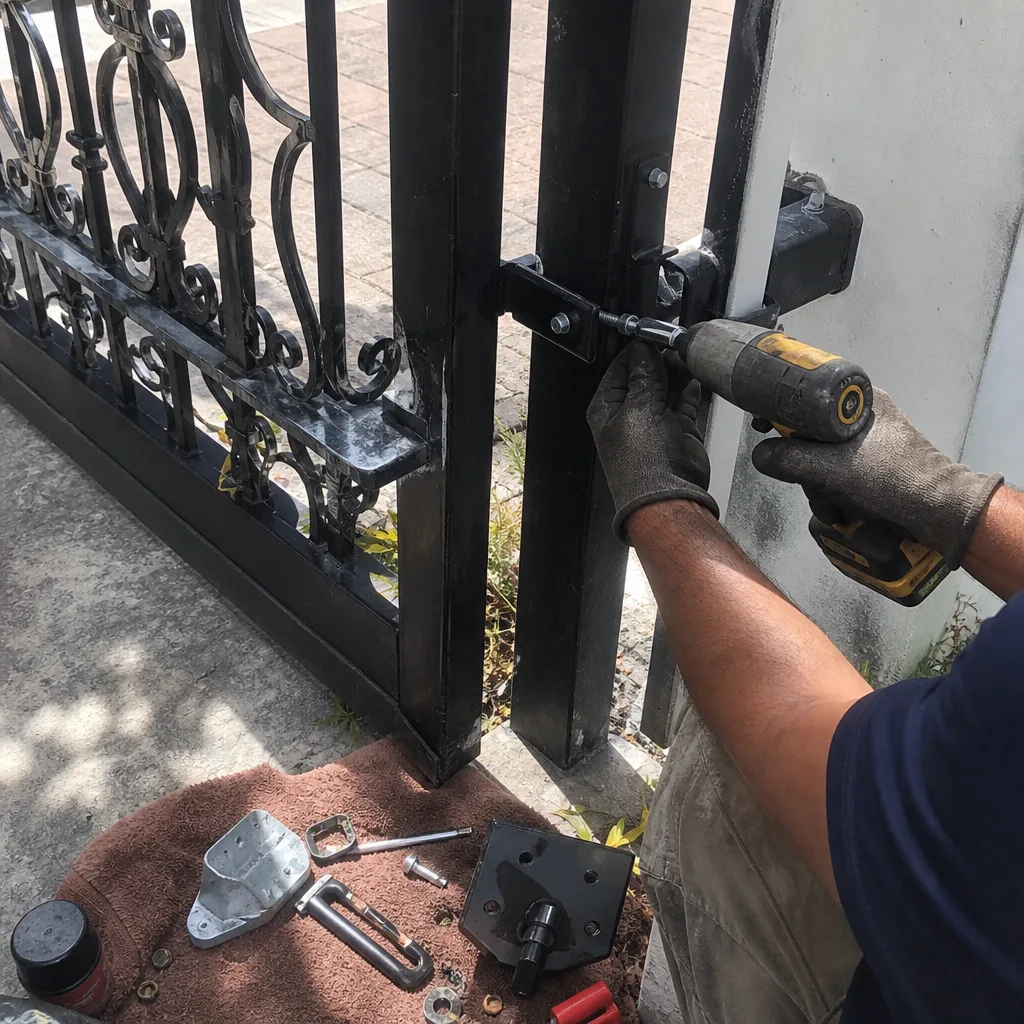
Fort Lauderdale and the surrounding Broward County communities have some of the densest HOA coverage in Florida. Communities like Rio Vista Isles, Coral Ridge, Harbor Beach, Victoria Park, and the gated enclaves off Bayview Drive operate under covenants that often require architectural review for any change to a driveway gate’s appearance, materials, or height. These rules are not building code. They are private contract law. And they can stop a gate project that the county would never care about.
Here is where the two layers diverge and, occasionally, contradict each other.
- County code cares about safety: electrical wiring, grounding, proper disconnects, operator safety features (photo-eyes, contact edges, force limits), and structural soundness.
- HOA covenants care about appearance and conformity: gate material, color, height, privacy slats, the size of the operator housing, even whether the gate has a pedestrian opening.
We have seen HOAs in Fort Lauderdale approve a gate replacement with conditions the county would never review, such as requiring the gate to exactly match the color of a neighboring property or forbidding a slide gate where a swing gate previously existed. We have also seen HOAs deny a gate style that the county would happily permit.
The homeowner caught between the two layers needs both approvals before the first tool touches the ground. Gate installation in Fort Lauderdale routinely involves a two-track approval: the HOA architectural committee and the county building department. Neither conversation substitutes for the other. A signed county permit does not satisfy an HOA covenant, and an HOA approval letter carries zero weight in a county inspection.
The safe sequence is to get the HOA decision first, then the county permit, then perform the work, then schedule the inspection. Reversing the sequence is how a Fort Lauderdale homeowner ends up with an installed gate that the HOA later requires to be modified at the owner’s expense.
New Gate Installation vs. Repair: Two Different Permit Processes
If we could fix one misconception in the Fort Lauderdale market, it is this: a permit for a new gate installation and a permit for a repair are not different sizes of the same process. They are different species.
A new gate installation permit is a full building permit application. In Broward County, it generally requires:
- A site plan drawing showing the gate location relative to property lines and the right-of-way setback.
- A structural detail for any foundation, column, or concrete pad that supports the gate or operator.
- An electrical plan if the gate is automated, showing the circuit feed, disconnect location, and operator wiring.
- Product specifications for the gate, the operator, and the safety devices (photo-eyes, contact edges).
- An elevation drawing showing gate height and swing direction, which the county reviews against right-of-way and sight-line rules.
The county then reviews the package, issues a permit number, and performs at least one rough inspection and one final inspection depending on the scope. The whole process commonly runs three to six weeks in Fort Lauderdale when drawings are complete and the application is clean. If a contractor tries to short-circuit this with “it’s just a gate, nobody checks,” walk away. That contractor has just volunteered you for the retroactive inspection process later.
A repair permit, when one is required at all, is almost always an electrical-only permit. It is a one-page application with a scope-of-work line, an estimated cost, and a contractor’s license number. The permit fee is small. The turnaround is days, not weeks. The inspection is a single final inspection focused on the electrical connection, not on the gate’s structure. In our experience as a gate repair company, roughly one repair job in thirty crosses the threshold into electrical-permit territory. But when it does, pulling the permit is faster than explaining why we did not pull it.
What a Final Inspection Actually Checks on a Gate
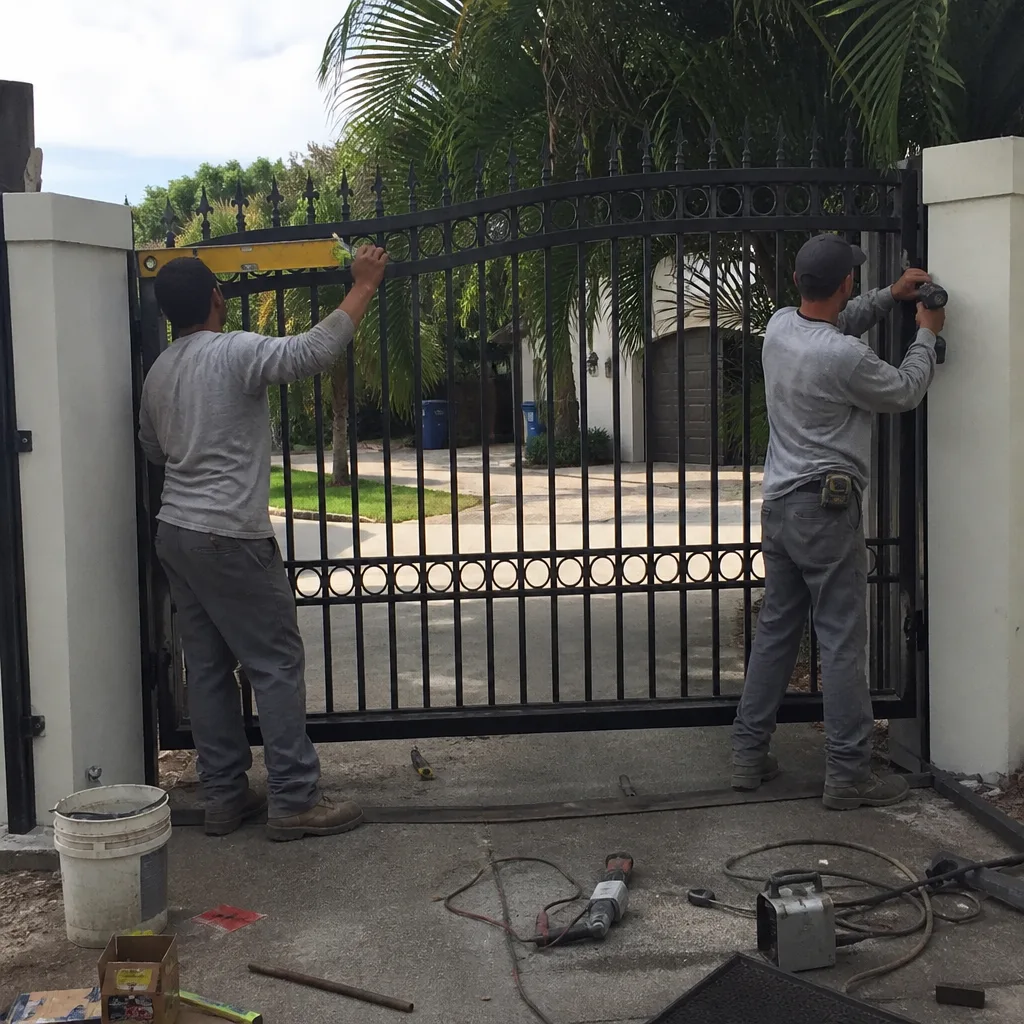
If you have never sat through a gate inspection in Fort Lauderdale, the checklist is shorter than most homeowners expect and longer than most contractors admit. Here is what a Broward County inspector is actually looking at on a gate final, based on the FBC and the NEC references an inspector carries into the field:
- The disconnect. A readily accessible, clearly labeled disconnecting means must be located within sight of the operator. The inspector will open the disconnect and verify it kills power to the operator only, not to half the house.
- Grounding and bonding. The operator housing, the gate frame if metallic, and any exposed conductive parts must be bonded to the equipment grounding conductor. The inspector checks continuity.
- Photo-eye placement and function. Every automated gate in Florida requires entrapment-protection devices covering the full travel path. The inspector blocks the beam and verifies the gate stops or reverses. We have seen a gate fail final for a photo-eye that passed its own self-test because the beam crossed the path at the wrong height.
- Contact-edge or force-sensitivity compliance. The operator must reverse on contact with a certain amount of force. The inspector tests this with a gauge in some jurisdictions, or by observing the reversal at an obstruction.
- Right-of-way clearance. Fort Lauderdale planners care about how far a swing gate intrudes over the sidewalk or the public right-of-way when open. If the gate’s open position extends past the property line, the permit should never have been issued, and the inspector will cite it.
- Wiring methods. Exposed wiring must be in recognized raceway or rated for wet locations. In the Florida climate, exposed Romex stapled to a fence post fails. UF-rated cable in a sleeve passes.
After the inspection, the record is filed with Broward County Building Code Services. A passed final produces a signed inspection card and a closed permit. That closure is what a title company looks for. A permit that was pulled but never closed is nearly as problematic as no permit at all, and it is common. We recommend homeowners keep a copy of the closed permit inside their house file. It becomes part of the disclosure documentation on the day they sell.
How Unpermitted Gate Work Appears in Title Searches
Unpermitted work does not announce itself. It surfaces in a title search as an open permit or as a discrepancy between the seller’s property disclosure and the county’s record of permitted improvements. Here is the sequence in a typical Fort Lauderdale transaction:
- The buyer’s title company orders a municipal lien search and permit history from Broward County.
- The county returns every permit ever pulled on the property. If a gate operator was installed under an electrical permit, that permit appears with a number, a date, and a status: open or closed.
- If the operator was replaced without any permit, no record appears. That looks fine on paper.
- But the buyer’s home inspector notices a newer operator or a fresh conduit run. The inspector asks the seller when the gate was automated. The seller says 2019. The county record shows nothing. The title company now has a discrepancy.
- The title company will not resolve the discrepancy. The seller resolves it by pulling a retroactive permit, scheduling an inspection, and fixing whatever the inspector finds. That process is how a Fort Lauderdale closing slips by three weeks.
In some cases, the unpermitted work never gets flagged at inspection. The gate works, the buyer does not ask, and the sale closes. The problem lands on the next seller, who now has a disclosure form asking whether any improvements were made without required permits. Lying on that disclosure is fraud. Disclosing it triggers the same remediation, but years later and at a higher cost.
Gate repair in Fort Lauderdale done to the like-for-like standard avoids this entire chain of events because there is no permit record to be missing. That is the cleanest outcome: a repair that never created a permit obligation in the first place.
Remediation Costs Before a Property Transfer in Fort Lauderdale
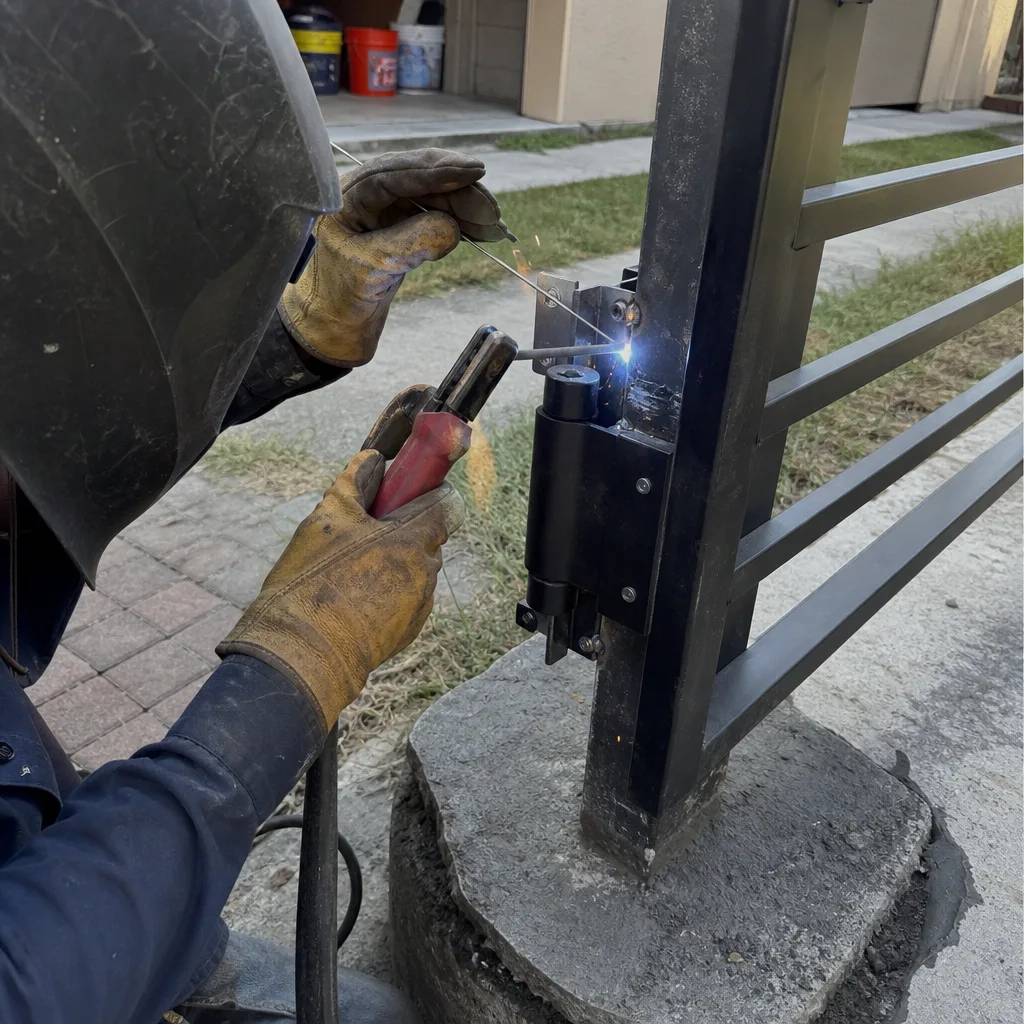
When unpermitted gate work is discovered before a sale, the homeowner pays for three things: the permit, the inspection, and the correction of whatever the inspector finds. In Broward County, a retroactive electrical permit for gate operator work typically runs $150 to $400 in permit fees depending on the job valuation. The inspection itself may be included in that fee or billed as a separate trip charge. So far, this is manageable.
The unpredictable cost is the correction. Specifically:
- Wiring that fails NEC because it was run without conduit or is not wet-rated. Correction often means trenching a new run. In Fort Lauderdale soil, with roots and shell rock, a short trench can cost $800 to $2,500 by the time it is dug, sleeved, backfilled, and reconnected.
- Missing photo-eyes or contact edges. The inspector will not close the permit until entrapment protection is present. Adding a compliant photo-eye and edge sensor to an older operator commonly runs $300 to $900 including the devices and the labor to wire and align them.
- A non-compliant disconnect. If the original installer wired the operator directly to a breaker with no means of disconnect at the gate, the fix is an external disconnect switch, typically $250 to $600 installed.
- A gate that fails structural review. If the permitting review determines the gate itself was installed without a building permit and the foundation or columns are inadequate, the remediation can climb steeply, often into the $3,000 to $8,000 range depending on the gate’s size and the extent of foundation work.
Add the soft cost: a delayed closing can cost a seller in hotel occupancy, bridge financing, or the collapse of the transaction if the buyer’s rate lock expires. The three-week delay described in the introduction of this guide is on the mild end. We have seen Fort Lauderdale sellers lose sixty days to a full retroactive permit and correction. For a few hundred dollars and a few days of patience when the work was originally done, every dollar of that remediation disappears.
How to Check If Your Existing Gate Has Open Permits
Any Fort Lauderdale homeowner can check their own property’s permit history in twenty minutes, for free, without a contractor. The exercise is worth doing even if you have no plans to sell, because an open permit discovered now is an easy fix; the same open permit discovered during escrow is a problem with a deadline attached.
Here is the step-by-step:
- Go to the Broward County Building Code Services Division permit search page.
- Enter your property address or folio number. The folio number is on your property tax bill.
- Review every permit record for your property. Look for anything that references a gate, operator, fence, electrical, or driveway improvement. Write down the permit numbers.
- For each permit, check the status column. Closed means the work was inspected and passed. Open means a permit was pulled but never finaled, and that is the one that bites.
- Compare the permit list against what you know about the property. If you had a gate operator installed in 2018 and no permit appears for that year, you either received a like-for-like swap (no permit required) or the work was unpermitted. Identify which one applies before a buyer asks you to.
If you find an open permit from a gate project, call the contractor who pulled it. A reputable contractor closes their own permits. If that contractor is gone or unresponsive, any licensed contractor can take over the permit and schedule the correction-and-inspection. The county is not punitive about open permits on residential properties; they want closure, not fines. The cost of closing an old gate permit in Fort Lauderdale is almost always under $1,000 when the work is otherwise sound. The cost of an open permit at closing is measured in weeks.
Florida-Specific Code Notes Worth Knowing
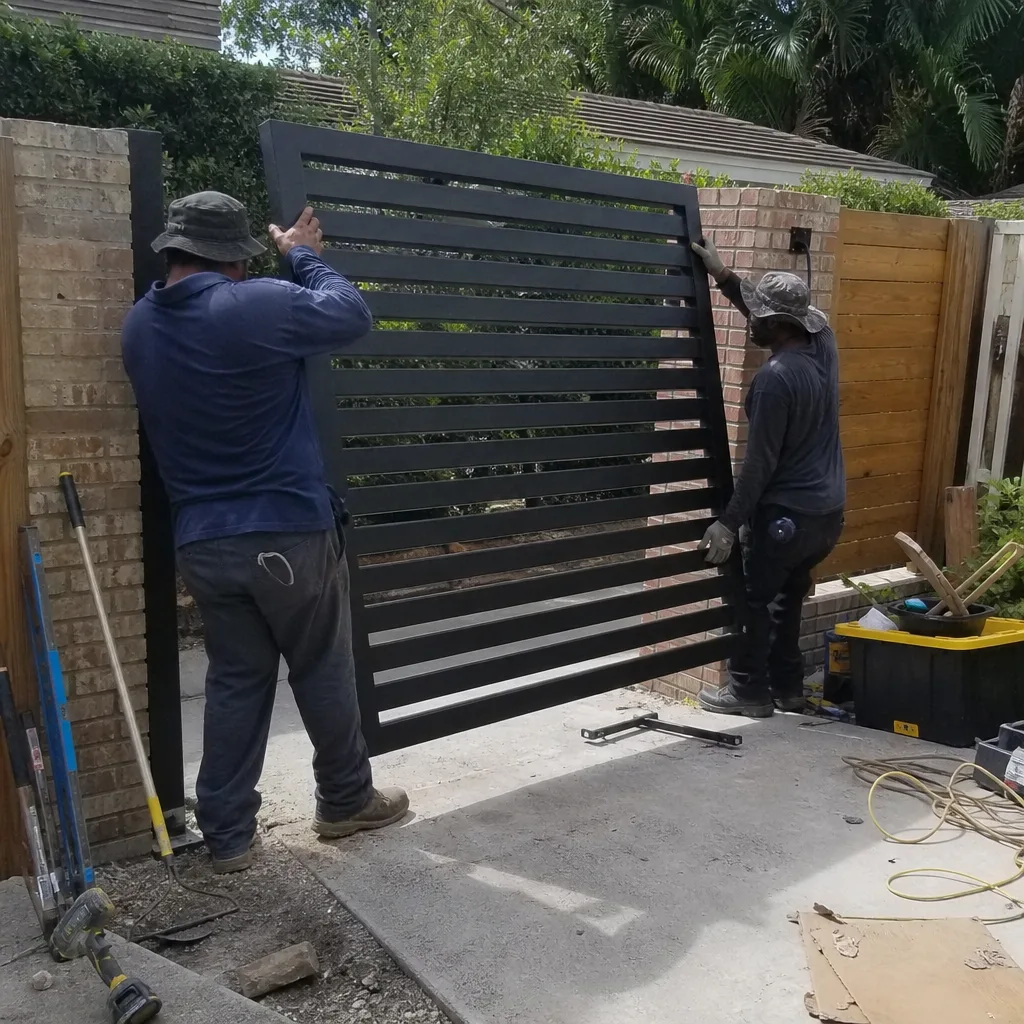
Florida’s climate and code environment shape gate work in ways a national how-to will never mention. Three specifics from our own field work in Fort Lauderdale:
- Corrosion-led wiring failures. The Atlantic salt air and seasonal humidity in Fort Lauderdale accelerate corrosion on exposed wiring terminals. What would be a cosmetic issue inland becomes an electrical hazard at the coast. The NEC’s wet-location requirements are not bureaucratic padding here; they are the difference between a ten-year operator and a three-year operator that trips its GFCI in every storm. This is also why the like-for-like replacement is so common along the barrier island and Las Olas: the operator dies from environment, not age, and the replacement does not change the wiring.
- Hurricane wind-load provisions. The FBC’s high-velocity hurricane zone provisions affect gate design in Fort Lauderdale. A gate is a wind sail. An inspector reviewing a new gate permit will check that the gate’s design, posts, and hinges have been specified for the wind loads in the applicable wind-speed map zone. This rarely changes a repair, but it absolutely changes new installations, especially taller privacy gates and solid-panel designs that catch wind like a wall.
- GFCI protection requirements. NEC Article 210.8, as adopted in the FBC, requires GFCI protection for receptacles installed outdoors. The outlet feeding a gate operator is an outdoor receptacle. In Fort Lauderdale, where afternoon thunderstorms are a summer constant, the GFCI protecting a gate circuit trips and is reset repeatedly. When we install or upgrade a gate circuit, we use a WR-rated (weather-resistant) GFCI and an in-use cover, which is what the inspector expects to see on the final.
What Vance Gate Repair Does Differently on the Permit Question
The permit conversation is not a side issue in gate work. It is the first thing that determines what a repair should cost and how long it should take. Most quotes for gate work in Fort Lauderdale answer neither question honestly. A contractor that quotes a low number and skips the permit has just transferred a future liability to you. A contractor that pulls a permit when no permit is required has padded the job with unnecessary cost.
We resolve this before we quote anything. In our 22,000-plus gates repaired and installed since 2014, the rule has been the same: name the permit obligation first, then name the price. If the work is mechanical and like-for-like, we tell you no permit is required and we write that on your estimate. If the work crosses into electrical scope, we tell you the permit is required, what it will cost, and who carries the responsibility of the final inspection. Either way, the price is written and handed over before any work starts. That is Haven Standard Clause 1, and it applies to every residential gate job we do in Fort Lauderdale, from a hinge on a Coral Ridge swing gate to a full operator swap in Rio Vista.
The documentation follows the work. Under Clause 4 of the Haven Standard, every visit leaves a photographed record of what was found, what was adjusted, and what was installed. If a permit was pulled, we photograph the inspection card and the closed-permit record and leave both in your file. On the day you sell the house, the title company asks for that record. You will have it.
We work on whatever operator is already on the property. A permit question is not an opportunity to upsell a new operator or a new gate. Most of the operators we see in Fort Lauderdale, from BFT and Linear on newer driveways to Viking and Ghost Controls on older estate gates, can be repaired or replaced like-for-like without dragging a homeowner through an unnecessary permitting process. When a new circuit is genuinely needed, we say so plainly and run the permit ourselves. We do not hand you a permit application and wish you luck.
Common Mistakes to Avoid
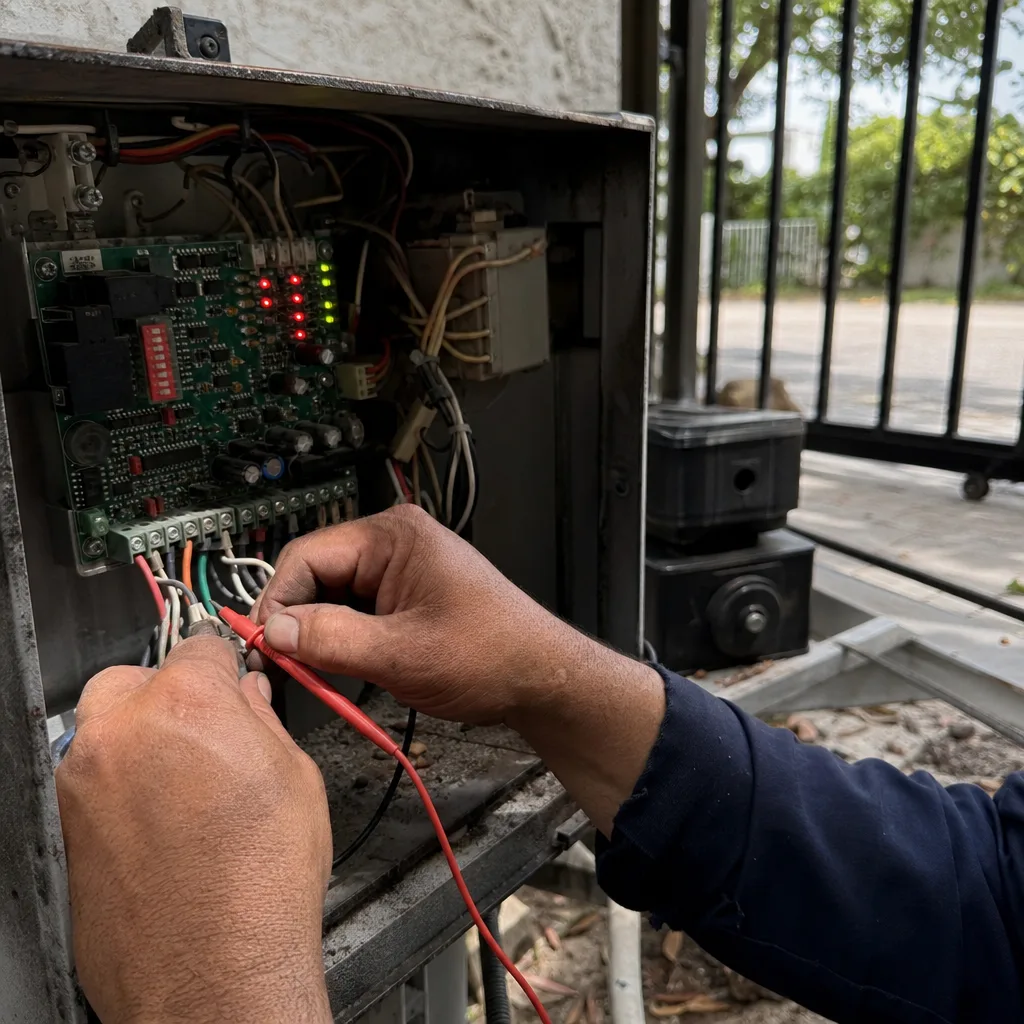
- Assuming any gate work needs a permit. Most mechanical repairs do not. If a contractor insists on a permit for a hinge replacement, you are being billed for an obligation that does not exist. A correct quote names the applicable threshold, not the safest assumption.
- Assuming no gate work needs a permit. The opposite error is worse. An operator swap that changes voltage or moves a circuit without a permit becomes a title problem and a safety problem. The distinction is not a matter of opinion; it is in the FBC and the NEC.
- Ignoring the HOA layer until after installation. In Fort Lauderdale communities with covenants, HOA approval is a separate gate you pass through before the county even sees the application. Installed first, approved later means rework at your cost.
- Pulling a permit and never closing it. An open permit on a gate job is almost as bad as no permit. The final inspection is the point of the whole exercise. Schedule it, attend it, keep the closed record.
- Treating the gate’s electrical feed as an afterthought. The most common correction we see on retroactive inspections in Fort Lauderdale is a gate circuit that was run without wet-rated wiring or conduit because it was faster and cheaper. It fails inspection. Run it right the first time.
- Hiring a contractor who will not put the permit status in writing. If the quote does not say whether a permit is required, the contractor is leaving the liability on your side of the table. A written scope with a written permit determination is the minimum standard.
- Believing that an old gate does not need safety devices. Florida’s entrapment-protection requirements apply regardless of the operator’s age. A 1998 operator with no photo-eye is not grandfathered. It is non-compliant.
When to Call a Professional
If your gate operator stops working and you do not know whether the repair is mechanical or electrical, call someone who does. The determining question is not whether the gate moves; it is whether the work will touch line voltage. A trained technician can diagnose that in minutes and give you a written answer. If the work requires a permit, a licensed contractor carries the responsibility of pulling it, scheduling the inspection, and closing it. If an HOA approval is required, the same contractor should be prepared to assemble the drawings and product specs the architectural committee will ask for. If you are selling a Fort Lauderdale home and have any doubt about open permits on your gate, have the permit record reviewed before the buyer’s title company does it for you. Read our How to Hire a Gate Repair Contractor in Fort Lauderdale: A Step-by-Step Guide to ensure you choose the right professional. Vance Gate Repair Fort Lauderdale offers free estimates in Fort Lauderdale. Call (754) 399-1474 and we will tell you, in writing, whether your gate work crosses the permit line and what it will cost. That written determination extends to every repair we quote. It is the whole point of the way we work.
Frequently Asked Questions
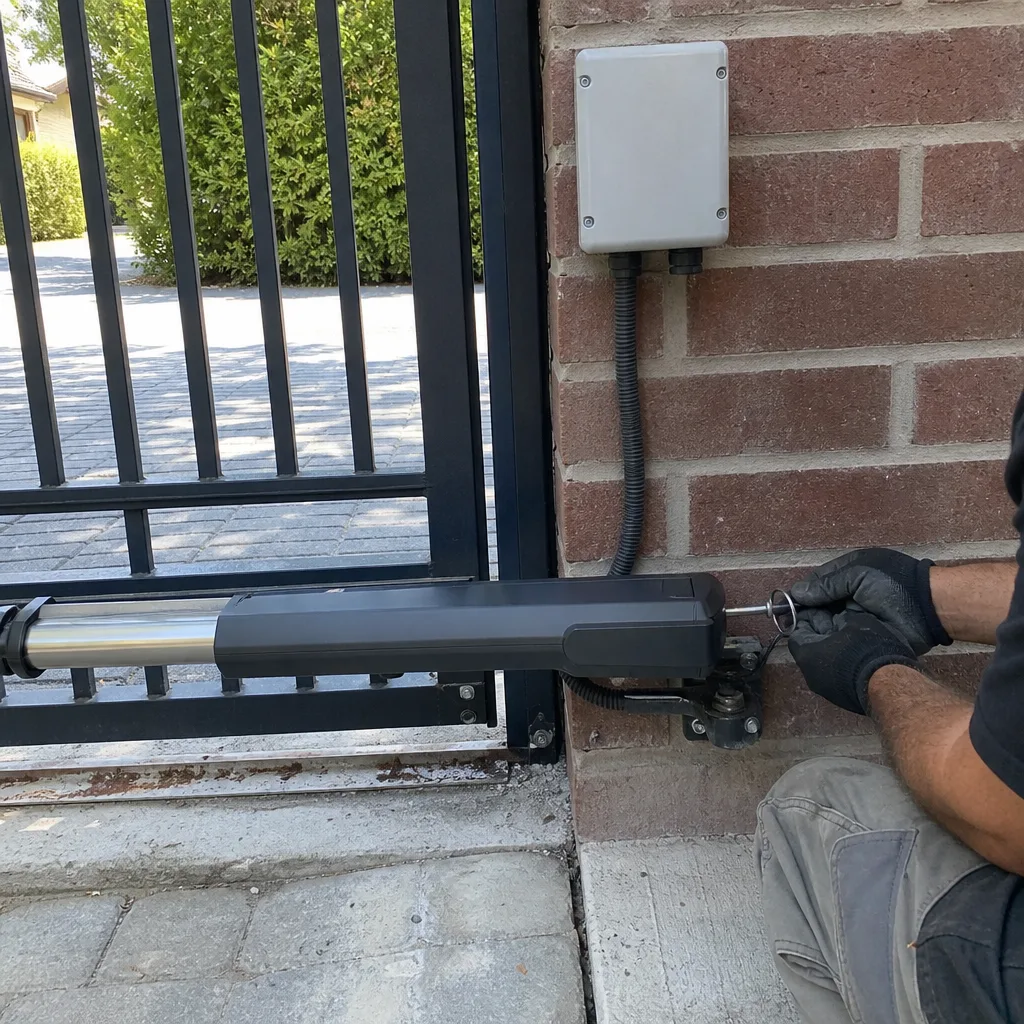
In Florida, a mechanical gate repair that does not change the operator’s electrical connection generally does not require a permit. Replacing hinges, wheels, boards, sensors, or a control board of the same type is treated as like-for-like replacement. Work that modifies the line-voltage wiring, adds a circuit, changes voltage, or relocates the operator triggers an electrical permit. If you are unsure which side of the line your repair falls on, call (754) 399-1474 for a written determination before any work starts.
A Broward County electrical permit for gate operator work typically costs between $150 and $400 in permit fees depending on the declared job valuation. A new gate installation permit with structural and electrical scope typically runs higher and requires drawings and a longer review. The permit fee is a small fraction of the remediation cost if the work is done without a required permit. We quote the permit fee as a line item when it applies and we handle the application and inspection scheduling.
You can replace a gate operator without a permit in Fort Lauderdale only when the replacement is like-for-like: same voltage, same circuit, same wiring configuration, same location. If the new operator requires a different feed, a new circuit, or a moved disconnect, an electrical permit is required. Our technicians will tell you which applies to your specific swap before you spend anything.
If unpermitted gate work exists on a Fort Lauderdale property, a title search will flag the absence of a permit record when the buyer’s inspector identifies work that the county shows no record of. The seller must then secure a retroactive permit, pass an inspection, correct any deficiencies, and close the permit before the sale can proceed. That process commonly adds three to eight weeks to a closing, while restoration costs depend on what the inspector finds.
No. An HOA architectural approval is a private contract matter between you and your community association. It does not satisfy a county permit requirement, and a county permit does not satisfy an HOA covenant. Both approvals are required where both layers exist. In our experience across Fort Lauderdale’s gated communities, the HOA process and the county process are handled separately and in that order.
A Broward County gate inspection checks the disconnect, grounding and bonding, photo-eye placement and function, contact-edge or force-sensitivity compliance, right-of-way clearance, and wiring methods. The inspector will block the photo-eye, verify the gate reverses, check the disconnect kills power, and review the wiring for wet-location compliance. We photograph the inspection card and the closed-permit record and leave both with the homeowner.
Search your address on the Broward County Building Code Services Division permit search page and review every permit record for your property. Not sure what warning signs to watch for? See our Gate Repair Warning Signs: A Fort Lauderdale Homeowner’s Reference Guide. Any record with an “open” status means work was permitted but never finaled. An open gate permit is usually inexpensive to close now and expensive to resolve during escrow. We help homeowners read through their permit history on any estimate visit in Fort Lauderdale.
The Bottom Line
The permit question on a Florida gate repair lands differently than most homeowners assume. Mechanical work, done like-for-like, rarely needs a permit. Electrical work does. HOA covenants add a second layer in many Fort Lauderdale communities. A new installation and a repair follow different processes entirely. And unpermitted gate work has a way of surfacing exactly when a seller can least afford it. The answer is not to guess. It is to determine the permit obligation before the work begins, get it in writing, and keep the closed record afterward. Every gate we touch at Vance Gate Repair Fort Lauderdale passes through that same filter. Call (754) 399-1474 for a written answer to the permit question on your gate, along with a written price to fix whatever is wrong.
Written by Adrian Vance, Owner at Vance Gate Repair Fort Lauderdale, serving Fort Lauderdale since 2014.