
Last updated September 20, 2026
Free on-site gate assessment - hinges, posts, and your LiftMaster or Nice gate operator checked before anything is quoted
The assessment is free and the quote is the invoice.

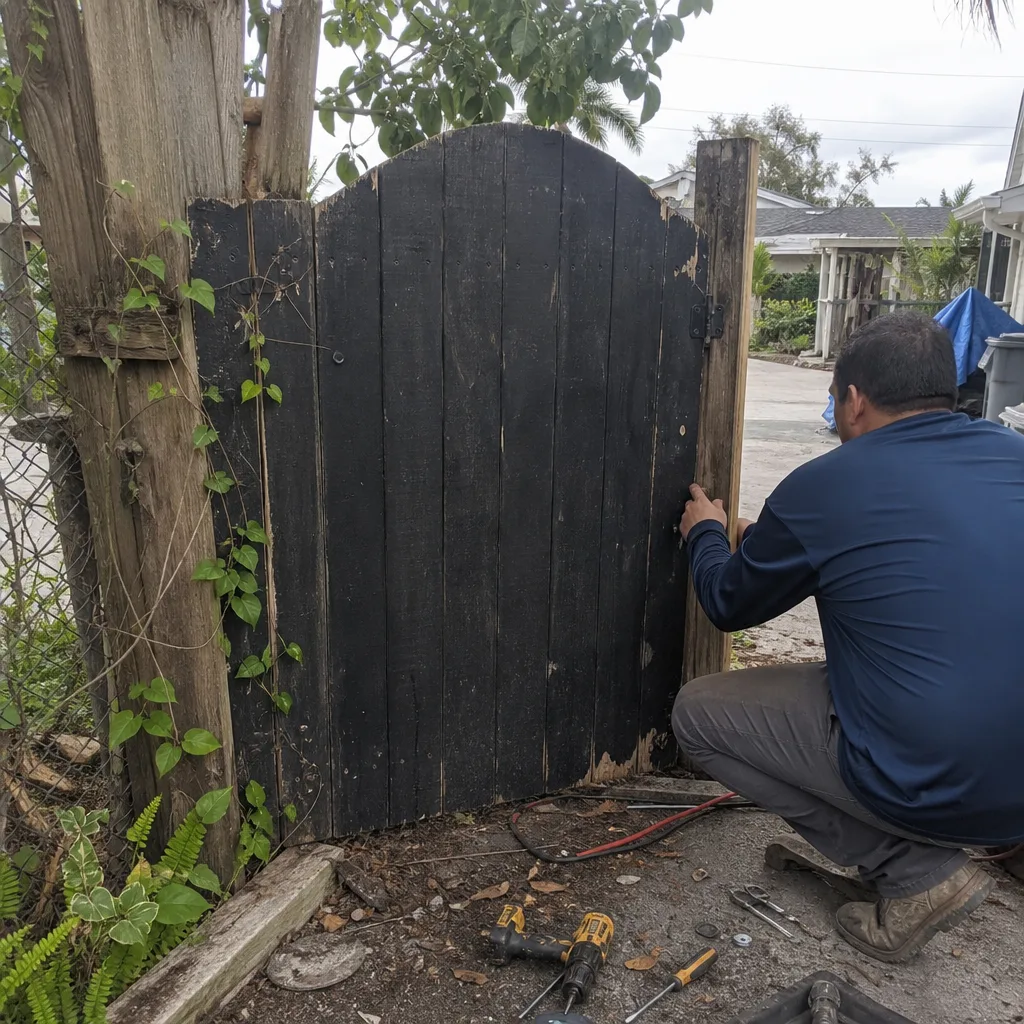 Before
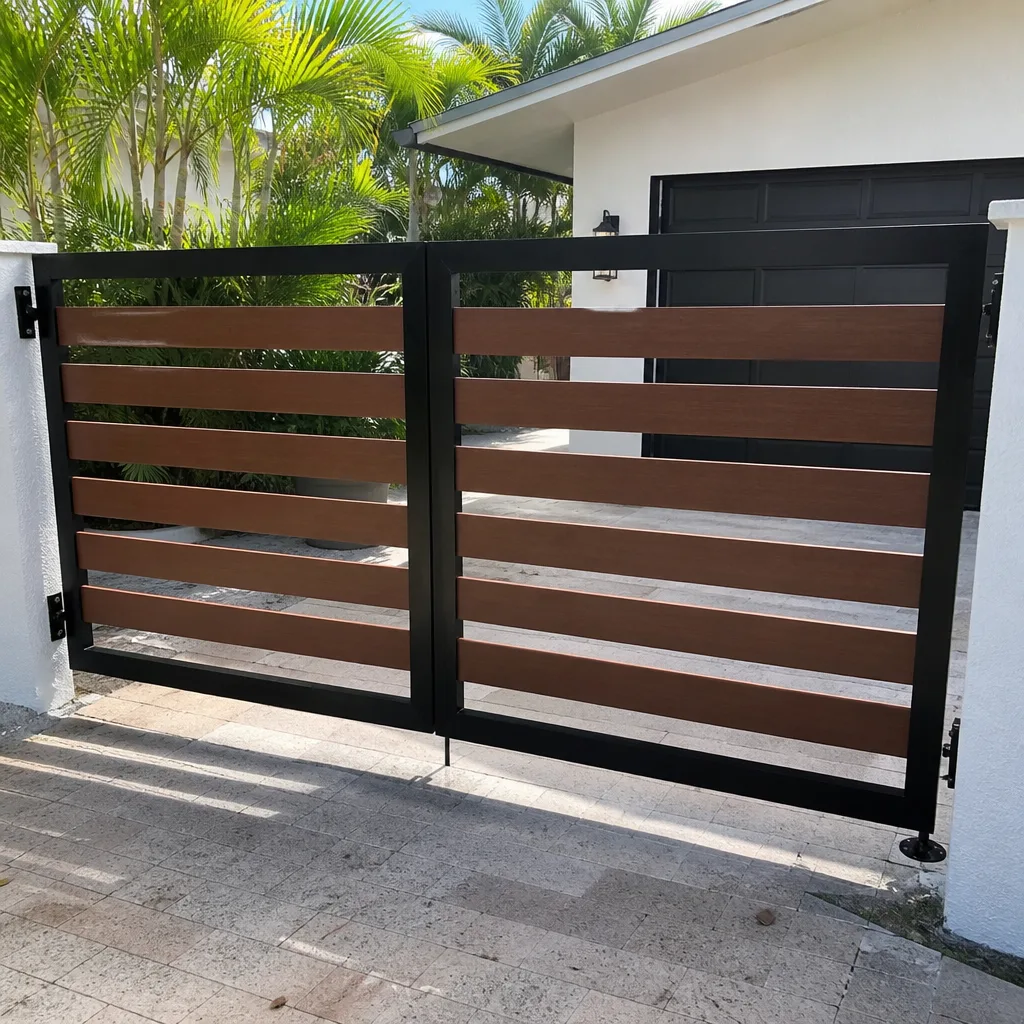 After
After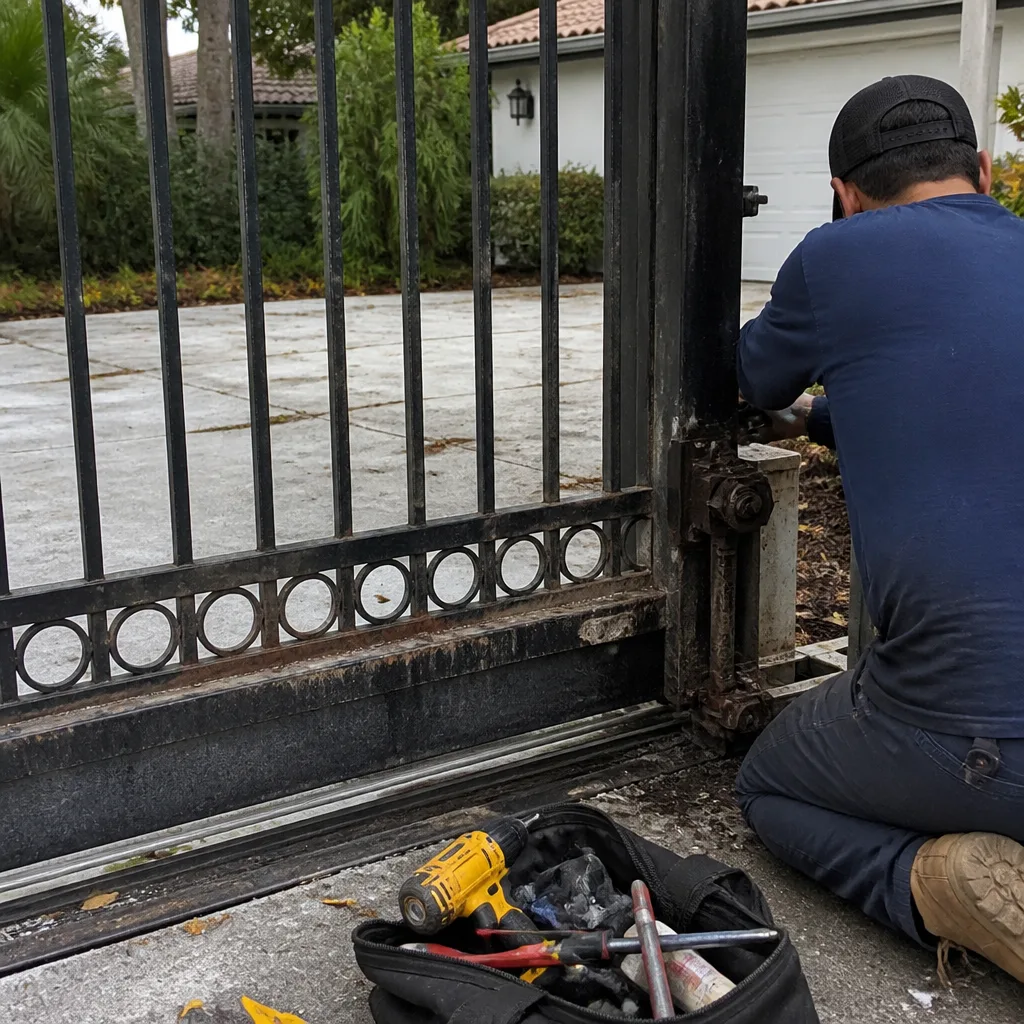 Before
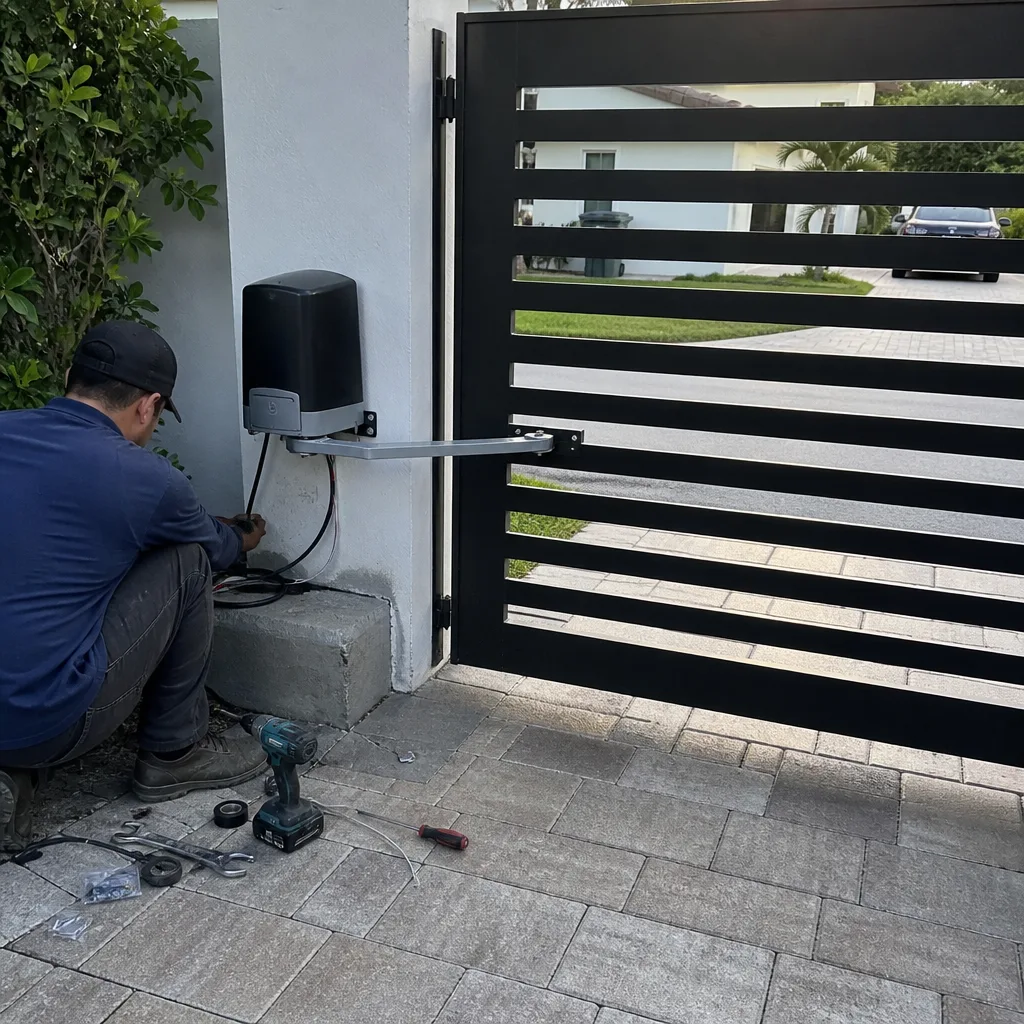 After
After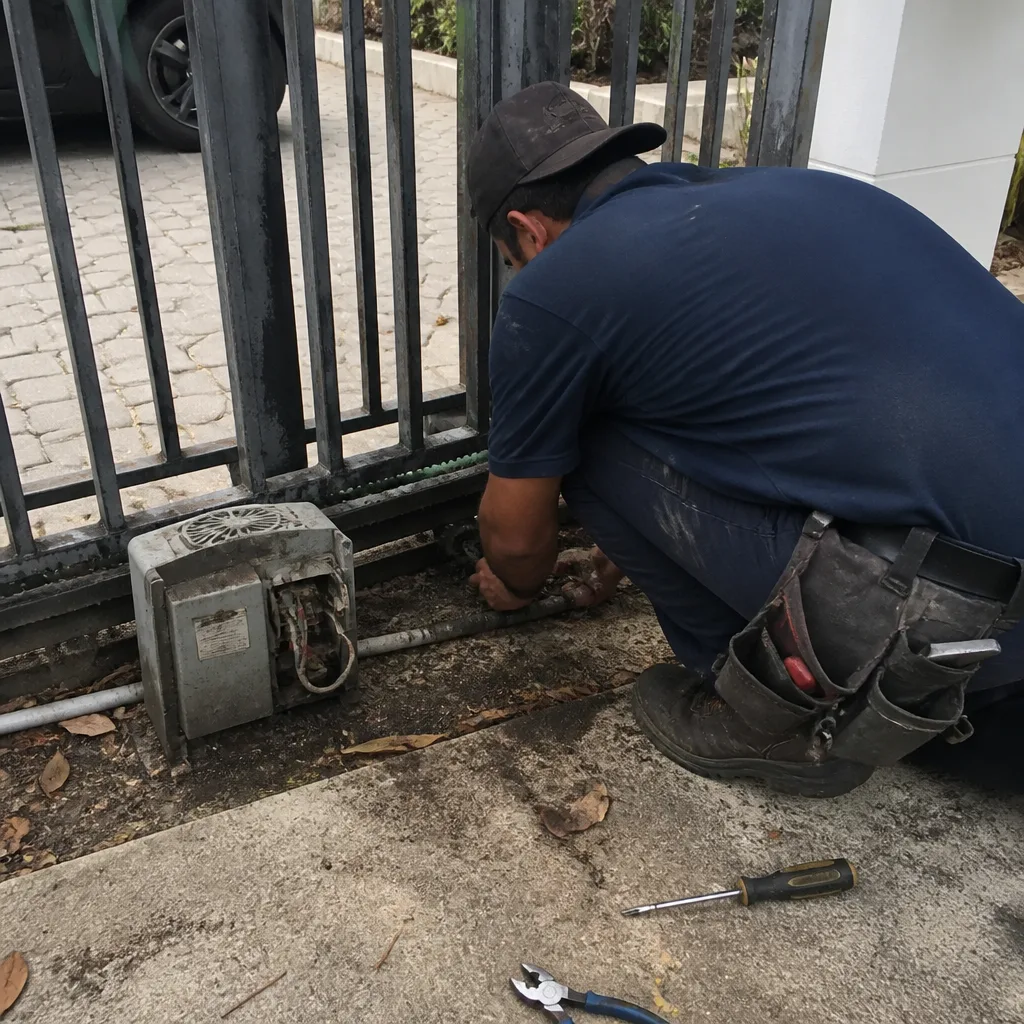 Before
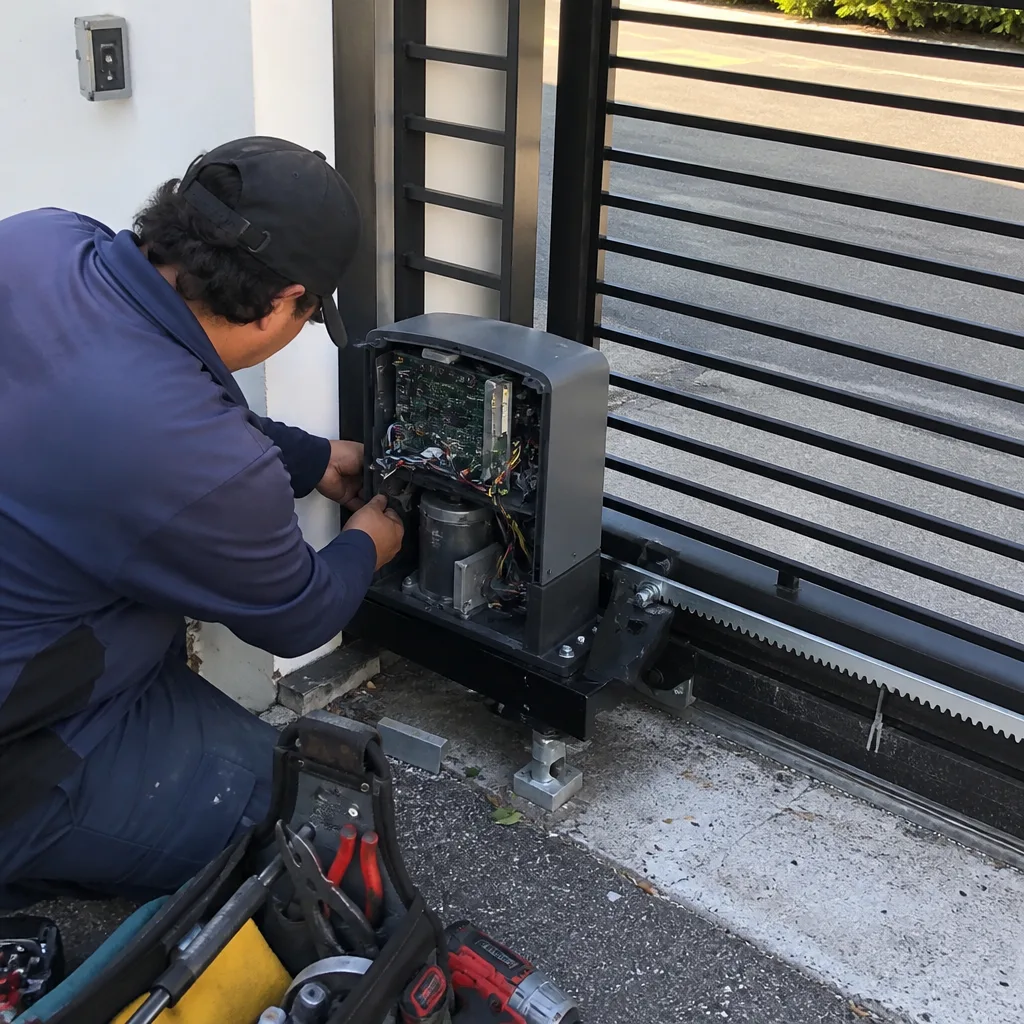 After
AfterGate Repair Warning Signs: A Fort Lauderdale Homeowner’s Reference Guide
A gate that hesitates for two seconds before moving has already told you the operator is drawing excess current. The question is whether you record that as a warning or dismiss it as “just how it runs.” Most gate failures in Fort Lauderdale don’t happen suddenly. They announce themselves weeks or months in advance through sounds, movements, and visible changes that get ignored because nobody taught homeowners how to read them. This guide changes that. You’ll learn what specific noises indicate about specific components, how to interpret movement irregularities, what corrosion looks like at each stage in a coastal environment, and how to keep an observation log that turns vague complaints into diagnostic data a technician can actually use.
Quick Answer
The most common gate repair warning signs in Fort Lauderdale are grinding or clicking noises from the operator, hesitation or jerky movement during travel, a gate that stops before reaching its full open or closed position, visible rust at hinge or weld points, and error-code flashes on the control board. Any of these signals means a component is under stress and will eventually fail, usually within 30 to 90 days. Documenting what you see and hear, then calling a technician for our Gate Repair services before the gate stops moving entirely, typically saves $400 to $1,800 compared to waiting for a full failure.
Table of Contents
- Sound-Based Diagnostics: What Your Gate Is Telling You
- Movement-Based Diagnostics: Reading Travel, Speed, and Stops
- Corrosion Progression in South Florida: Stages 1 Through 3
- Control Board Warning Indicators: Error Codes and LED Flashes
- How to Keep a Gate Observation Log
- Component Wear Patterns: What Fails First in Fort Lauderdale
- Common Mistakes to Avoid
- When to Call a Professional
- Frequently Asked Questions
- The Bottom Line
BeforeAfterSound-Based Diagnostics: What Your Gate Is Telling You
Your gate motor makes noise every time it runs. The key is knowing which noises are normal and which ones signal a specific component under stress. In our experience across Fort Lauderdale, maybe 60% of the diagnostic information we need is already available before we arrive, if the homeowner can describe the sound accurately. Here’s what each sound typically indicates.
A grinding noise during travel almost always points to the gear train inside the operator, or to metal-on-metal contact at a wheel or roller. On chain-driven slide gates, grinding means the chain tension has drifted and the chain is riding partially off the sprocket. On swing gates with a hydraulic operator like certain FAAC or BFT models, grinding can indicate low hydraulic fluid, which forces the pump to work against air pockets. The fix in either case is usually straightforward if caught early: a chain adjustment or a fluid top-off and seal inspection. Let it grind for six weeks and the sprocket teeth wear to points, or the pump cavitates and scores its internal surfaces. The repair just went from $180 to $900.
A clicking noise when the gate tries to start but doesn’t move is typically the capacitor or the start relay. On LiftMaster swing operators, a rapid click-click-click with no movement means the capacitor has failed and the motor can’t generate enough starting torque. This is a $60 to $140 part on most models, and it takes a technician about 45 minutes to replace. Homeowners sometimes describe this as a “buzzing” sound, and the distinction matters: clicking is sharp and rhythmic, buzzing is continuous.
A continuous hum or buzz with no movement indicates the motor is receiving power but the output shaft isn’t turning. On slide gates, this often means the drive belt or chain has snapped or jumped, leaving the motor spinning freely or straining against a bound gearbox. Cutting power quickly matters here because a stalled motor draws high current and can burn out windings. Most modern operators have thermal overload protection, but older units in Fort Lauderdale, especially those installed before 2010, sometimes don’t.
A squealing noise that happens only at certain points in the travel usually means a bearing or bushing at one hinge point is dry and starting to seize. Swing gates have hinge bearings at the post, and slide gates have roller wheels running on a track. The location of the squeal tells you which one. A dry bearing doesn’t fix itself, and in Fort Lauderdale’s humidity, the exposed metal inside that bearing is oxidizing even as you listen to it.
What to Record About the Noise
- The exact sound: grinding, clicking, humming, squealing, or clunking
- When it happens: at start, mid-travel, at stop, or continuously
- Which direction: opening, closing, or both
- Whether it changes with temperature or after rain
- A phone video with audio, dated, stored in your phone’s gallery
We ask for these details on every gate repair call in Fort Lauderdale because they tell us which component to bring parts for on the first visit. A homeowner who says “it grinds when closing but only in the last three feet” has just told us the problem is at the closed-limit position, not inside the operator.
Movement-Based Diagnostics: Reading Travel, Speed, and Stops
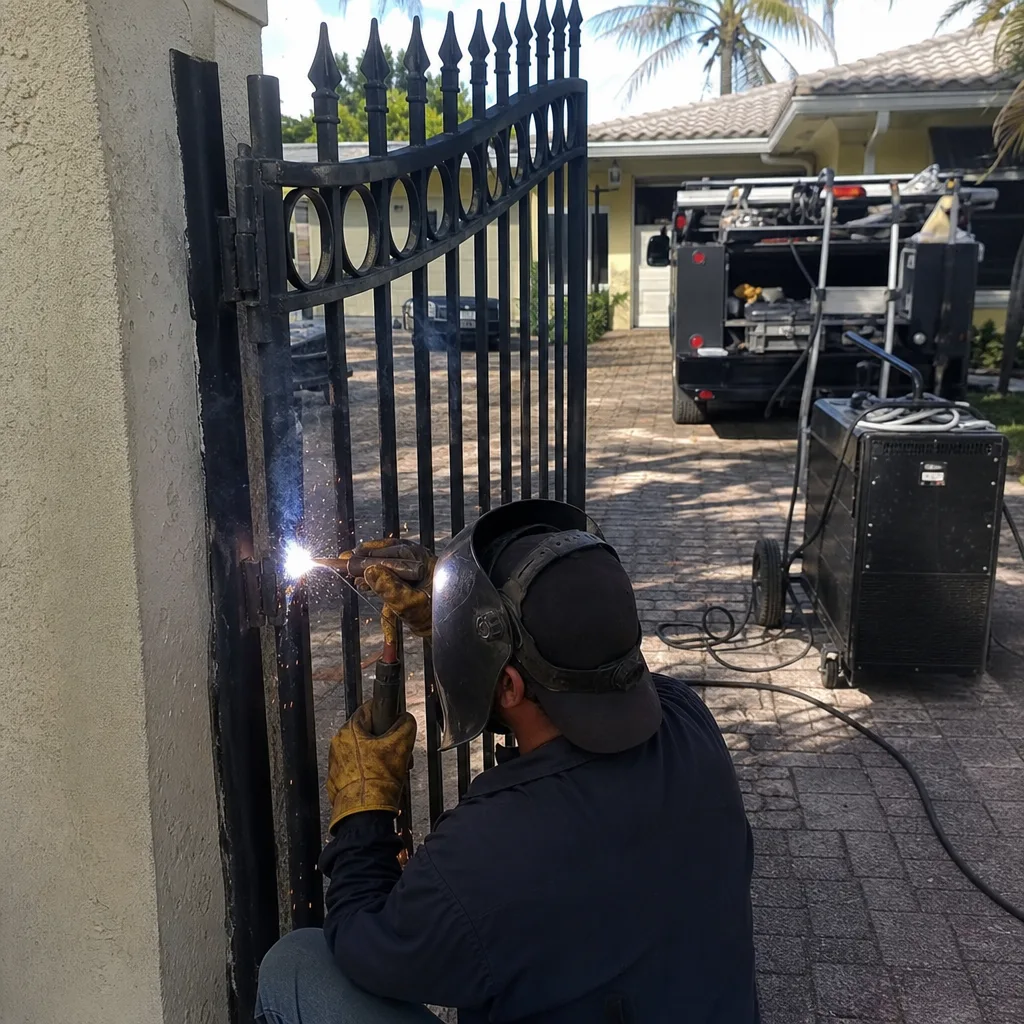
Gate movement problems fall into three categories, and each category points to a different system. Learning to separate them is the single most useful diagnostic skill a Fort Lauderdale homeowner can develop.
Hesitation before movement means the operator is drawing excess current to overcome resistance. The resistance itself comes from one of three places: a mechanical bind in the gate’s travel, a failing capacitor or start circuit, or low voltage at the control board. In Fort Lauderdale neighborhoods with older electrical services, like Victoria Park or Rio Vista, we see voltage drop more often than in newer developments. The fix for a mechanical bind is usually a hinge adjustment or track cleaning. The fix for a failing capacitor is a part replacement. The fix for low voltage might be a dedicated circuit or a heavier gauge wire run, which is a licensed electrician’s job. Three causes, three very different repairs. Watching a gate hesitate for two seconds before each start and doing nothing means the underlying condition is getting worse every cycle.
Inconsistent speed during travel suggests either a failing speed sensor or a mechanical inconsistency. On slide gates with a chain drive, a gate that moves faster in the middle and slower at the ends usually means the chain tension is uneven or the gate weight is distributed on a worn roller that catches at one point on the track. On swing gates with an articulating arm operator, like those from Mighty Mule or FAAC, speed changes often trace to a hinge bearing that’s binding partway through the swing arc. The gate accelerates when the arm overcomes the bind, then slows when it hits the next sticky point. The pattern is diagnostic: if the change happens at the same physical position every cycle, the problem is mechanical at that position. If the speed varies randomly, the problem is electronic.
Incomplete travel means the gate stops short of its full open or closed position, or reverses before it gets there. This is often reported as “the gate won’t close all the way” or “it bounces back.” On modern operators, incomplete travel usually means one of two things: the limit switch or limit setting has drifted out of calibration, or the obstruction sensor is triggering falsely. A limit switch is a physical or magnetic stop that tells the control board “you’ve reached the end.” When it drifts, the gate stops early. A photo-eye or safety edge that triggers falsely tells the board “something is in the way,” and the board reverses. In Fort Lauderdale, where afternoon thunderstorms roll through almost daily during summer, water intrusion into photo-eye housings is a common cause of false triggers. The fix is often a reseal and realignment, not a sensor replacement.
- Record which direction fails: open, close, or both
- Record whether the gate stops short, reverses, or pushes past the stop point
- Watch for a pattern: same position every time, or random
- Check for visible obstructions at the gate path, including vegetation that’s grown since installation
- Note whether the problem started after a storm, a power outage, or any work on the property
These five observations take under four minutes and they change a service call from “figure out what’s wrong” to “bring the right part and fix it in one visit.” We write the price before we start on every gate motor and opener job in Fort Lauderdale, and part of that speed comes from homeowners who show up with useful observations already in hand.
Corrosion Progression in South Florida: Stages 1 Through 3
Fort Lauderdale’s coastal environment accelerates metal corrosion at roughly triple the rate of inland Florida. Salt air, high year-round humidity, and frequent rain combine to create conditions where unprotected steel starts showing surface oxidation within 18 months of installation. Understanding the three stages of corrosion tells you when you can intervene cheaply and when the component is already compromised.
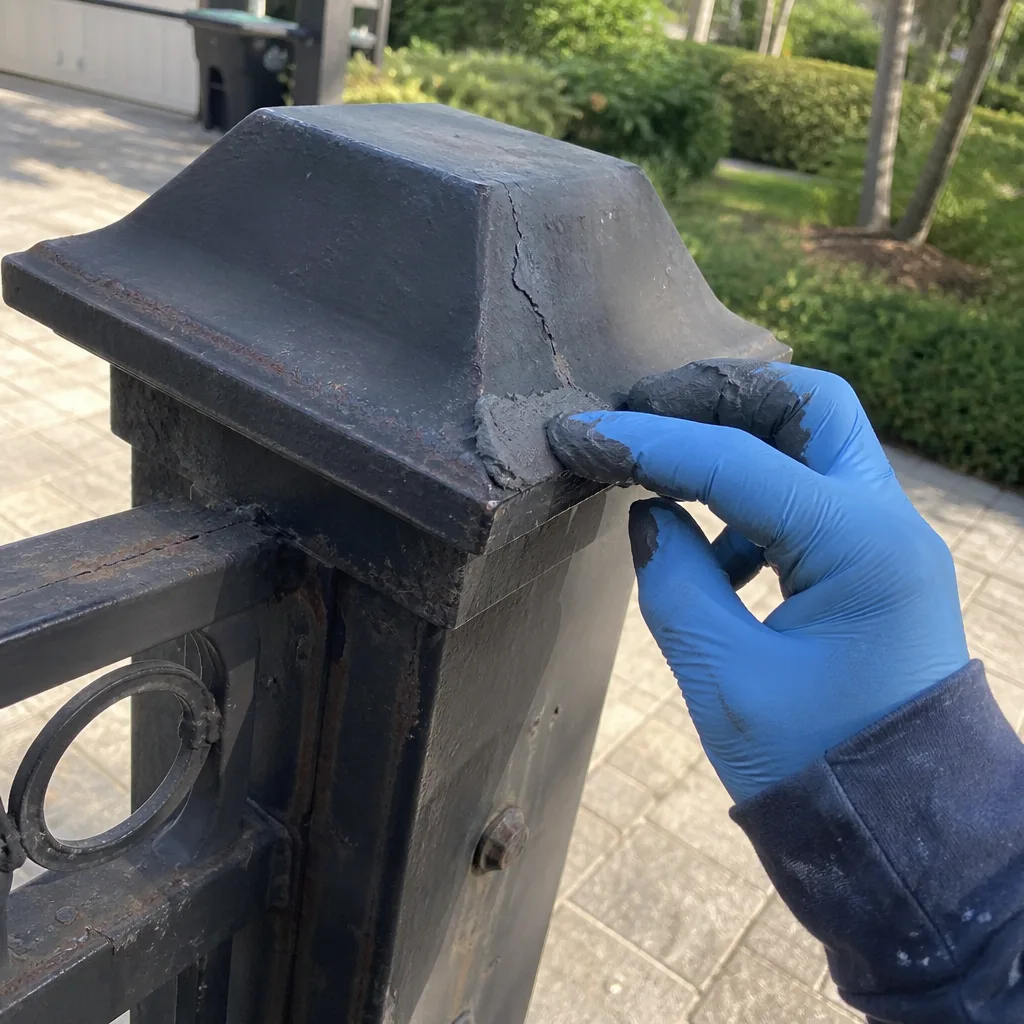
Stage 1: Surface Rust appears as a reddish-brown discoloration or light flaking on exposed steel or iron surfaces. You’ll see it first at welds, bolt heads, and any place the factory finish has been scratched or worn. At this stage the metal underneath is structurally sound. The fix is mechanical removal (wire brushing or sanding), application of a rust-inhibiting primer, and repainting with a marine-grade finish. On most gates, treating Stage 1 rust at a hinge or weld point costs under $50 in materials and takes an afternoon. Untreated, Stage 1 progresses to Stage 2 within 12 to 18 months in Fort Lauderdale’s climate.
Stage 2: Pitting and Scale is what happens when oxidation works its way into the metal rather than across it. You’ll see small craters, flaking layers, and orange staining that drips onto surrounding surfaces. At this stage, the component’s cross-section is reduced and stress concentrates at the bottom of each pit. Hinge pins, chain links, and track bolts are the usual first casualties. A Stage 2 hinge still functions, but its fatigue life is cut dramatically. Replacement of the affected hardware now is the only reliable fix. Welding repair is sometimes possible, but the welder is joining metal of unequal remaining thickness, and the weld itself becomes the next corrosion site unless properly passivated and coated.
Stage 3: Structural Compromise is when the material has lost enough section that it can no longer carry its design load. Gates sag at the hinge post, weld joints crack through, slide-gate track anchors pull free, and the operator arm can tear its mounting plate. By this point, partial replacement is usually required. Sometimes the gate leaf itself is salvageable with new hinge hardware and a frame repair; sometimes the corrosion has worked into the internal frame members and the whole leaf needs replacement. In Fort Lauderdale, a Stage 3 gate failure during a hurricane watch is a real security problem, not just a maintenance inconvenience. A gate that can’t be closed is an open perimeter.
Corrosion Checklist for Fort Lauderdale Homeowners
- Inspect all welds and hinge points every six months, minimum
- Look for orange staining below bolt heads: that’s the telltale of water intrusion
- Check the bottom rail of slide gates: it sits close to the ground and harbors moisture
- On aluminum gates, watch for white powder (aluminum oxide) and galvanic corrosion where steel hardware contacts aluminum
- After any named storm, do a full hardware inspection even if the gate still operates
Control Board Warning Indicators: Error Codes and LED Flashes
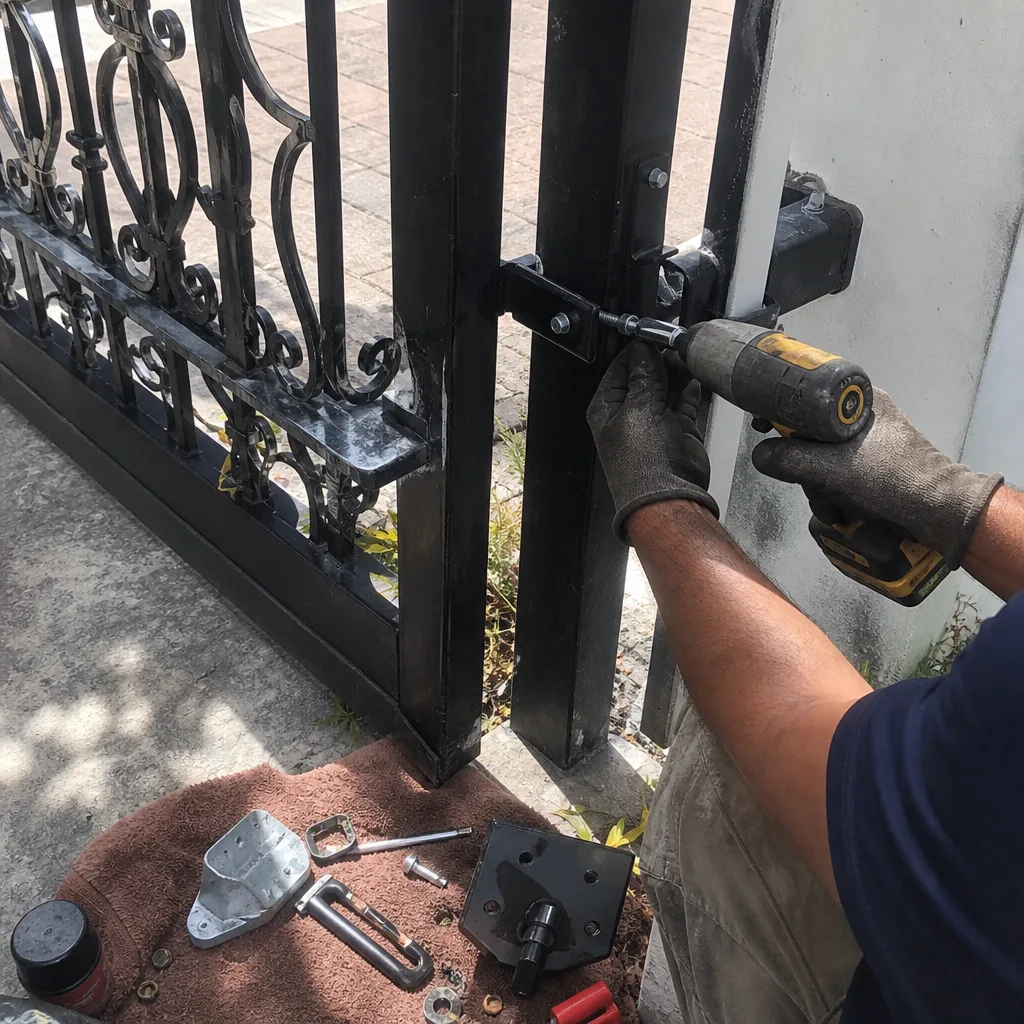
Every modern gate operator has a control board with diagnostic LEDs or a small display that reports error conditions. Learning how to read these indicators is like having the operator explain what’s wrong, and it’s the single most underutilized diagnostic tool we see in Fort Lauderdale.
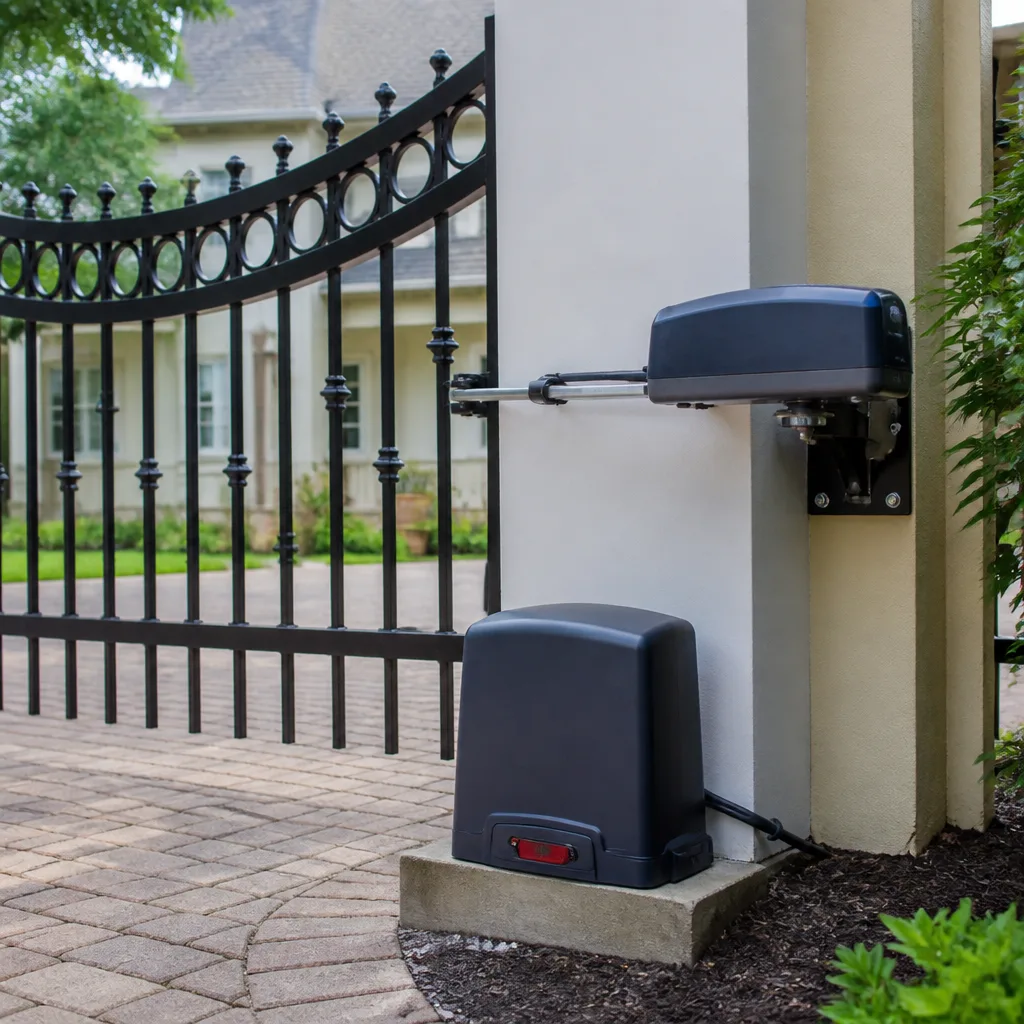
LiftMaster operators use a diagnostic LED that blinks in patterns. A consistent slow blink usually means the board is in “learn” mode or waiting for a limit. Two blinks followed by a pause typically indicates a photo-eye obstruction or misalignment. Five blinks often points to a motor overcurrent condition, meaning the board detected the motor drawing more current than it should, which usually means a mechanical bind. The exact code varies by model and revision, and we reference the specific installation manual for every unit we service.
Linear (now owned by Nortek) operators use an onboard speaker and diagnostic tones, and some models include a two-digit display. A common display code on older Linear slide operators is a flashing “1” or “2” indicating an obstruction-sensor fault, while a steady “E” indicates an entrapment-sensor circuit problem. FAAC boards use LED combinations on the board itself, usually viewable by opening the cover. Mighty Mule swing operators, popular with Fort Lauderdale homeowners who installed their own systems, use a series of beeps on startup: one beep means the system is normal, two beeps indicate a battery condition (on solar models), and three or more beeps indicate a specific fault depending on the model revision.
The practical takeaway: when your operator flashes, beeps, or displays a code, write it down immediately. Don’t reset the breaker and hope it clears. The code is the operator’s self-test system telling you what it measured, and a technician who arrives with the code in hand can often diagnose the problem before touching the gate.
One more thing worth knowing: control boards in Fort Lauderdale are subject to power surges from lightning strikes, which are common during summer afternoon storms. A board that resets randomly or loses its limit settings after a storm may have sustained surge damage. The fix is sometimes a surge protector retrofitted at the operator’s power connection, something we recommend on any gate installation in Fort Lauderdale where the operator’s power comes from a long underground run.
How to Keep a Gate Observation Log
A gate that has “been acting up” is a diagnostic challenge. A gate with two weeks of dated observations is a diagnostic roadmap. The difference between the two is a simple log that takes 60 seconds per entry. Here’s how to build one.
- Create a note on your phone titled “Gate Log.” Date it the day you create it. This is your master file.
- On each entry, record the date and time. Time matters because some failures are temperature-dependent or rain-dependent.
- Describe the behavior in one sentence. Use the vocabulary from this guide: hesitation, grinding, incomplete travel, reversal, error code. “Gate hesitated 2 sec before opening, 7:15 AM” is a complete entry.
- Add a photo or video every time. A 10-second video with audio captures the sound, the movement, and the environment. Store it with the log entry.
- Note the weather. Fort Lauderdale’s gate problems cluster around rain events. “Same hesitation, but only after overnight rain” is a diagnostic clue.
- Review after two weeks. Look for patterns: same time of day, same weather, same direction. Patterns tell the technician what system to check first.
We ask every homeowner who calls about an intermittent problem to keep a log for one week before scheduling a visit, and we point them to more guides & resources for ongoing maintenance. The reason is practical: a technician who arrives while the gate is working correctly has to rely on the homeowner’s description. A technician who arrives with a week of dated observations can often identify the failing component from the pattern alone, then verify with testing. This is how commercial access-control diagnostics work, the habit Adrian Vance brought to residential gate work in 2014, and it’s the same documentation habit we apply to our own work: every visit includes a written record of what was found, what was adjusted, and what was replaced.
Component Wear Patterns: What Fails First in Fort Lauderdale
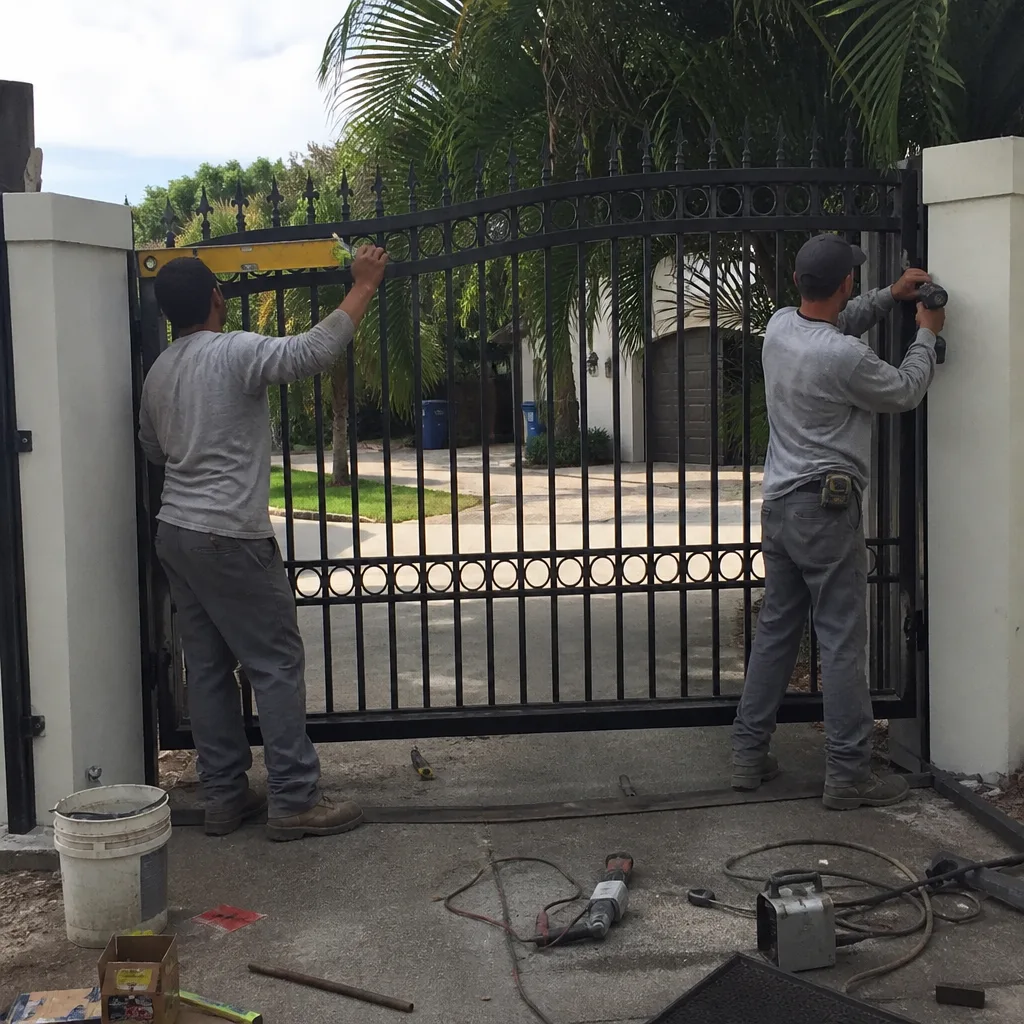
Every climate has a signature failure pattern. In Fort Lauderdale, the pattern is remarkably consistent across thousands of gates, as detailed in our Seasonal Gate Repair Care for Fort Lauderdale: Year-Round Homeowner’s Guide. Knowing what fails first on your type of gate tells you where to look before anything goes wrong.
Swing gates: Hinge bearings fail first, followed by the operator arm bracket, then the control board. The hinge bearing on a swing gate carries the entire weight of the leaf every time it moves. Coastal humidity seeps into the bearing, washes out the grease, and initiates corrosion. A failed hinge bearing makes the gate sag, which changes the geometry of the operator arm, which then wears its bracket. By the time the board fails, usually from overcurrent as the operator strains against the mechanical degradation, the real problem has been building for months.
Slide gates: Roller wheels and track wear first, followed by the chain or belt, then the limit switch assembly. Slide-gate rollers are exposed to everything: sand, salt spray, rain, and whatever debris the wind delivers. When a roller seizes, the gate drags it across the track instead of rolling, which grinds a flat spot on the roller and scores the track surface. The operator works harder to overcome the drag, which accelerates motor wear. The limit switch, mounted near the track at either end of travel, gets knocked out of alignment by the gate’s changed travel pattern.
Operators from all brands: The start capacitor is the single most common electrical failure across every brand we service, including LiftMaster, FAAC, BFT, and Mighty Mule. Capacitors degrade with age and heat, and Fort Lauderdale’s ambient heat shortens their service life compared to cooler climates. The symptom is exactly what you’d expect: the gate tries to start, clicks, and doesn’t move. It’s a straightforward repair and an inexpensive part, and it’s the repair we’d flag as the biggest “catch it early” opportunity in this guide. Vance Gate Repair Fort Lauderdale services all nine major automation brands, which means the diagnosis doesn’t steer you toward a replacement operator when a $100 capacitor fixes the problem.
Common Mistakes to Avoid
- Ignoring a new noise because “it still works.” A gate that grinds for two months and then stops is a $900 gearbox replacement. A gate that grinds for one week and gets a chain adjustment is a $180 service call. The noise is the cheapest diagnostic you’ll ever get.
- Resetting the breaker repeatedly. A breaker that trips once is an anomaly. A breaker that trips three times is a diagnostic message: something is drawing excess current. Resetting it without investigation lets whatever is failing continue to fail until the breaker stops resetting and the component is destroyed.
- Lubricating without cleaning first. Spraying lubricant over a dirty chain or a greasy hinge traps abrasive grit against the moving surfaces. The lubricant you added to “fix” the squeal becomes a lapping compound that accelerates wear. Clean first, then lubricate.
- Treating corrosion as cosmetic. In Fort Lauderdale, rust is never just a surface issue. It’s a clock running on the component’s remaining structural life. The right time to address rust is Stage 1, the day you notice it, not when the weld cracks.
- Waiting until the gate fails entirely. A gate that fails during business hours on a weekday is an inconvenience. A gate that fails overnight on a weekend, when you need the property secured, is a security event. The warning signs in this guide are your advance notice.
- Hiring someone who gives a verbal quote. If a technician won’t put a price in writing before starting work, the final invoice is unknown by definition. In Fort Lauderdale, where gate repair competition is active, insist on the written number. We don’t say this to sell our own service; we say it because a written price is the bare minimum of professional practice in any trade.
When to Call a Professional
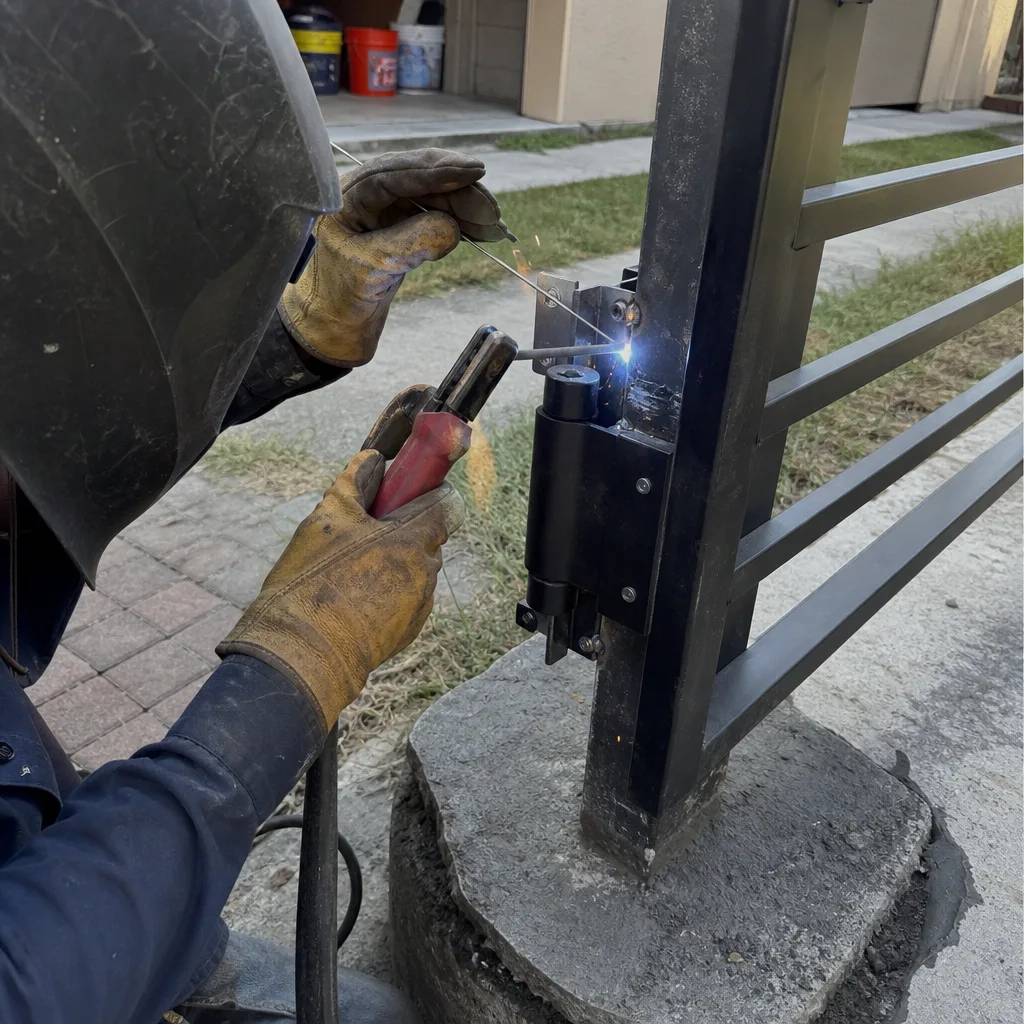
Some gate work is appropriate for a careful homeowner: cleaning tracks, inspecting hinges, recording observations, treating Stage 1 surface rust. Other work requires a trained technician with the right tools and a respect for the risks. High-tension springs, counterbalance mechanisms, and the electrical side of a gate operator can cause serious injury if handled incorrectly. A gate leaf weighs hundreds of pounds. A capacitor stores charge even after the power is off. If your gate is showing any warning sign from this guide and you’re not certain what it means, call. Vance Gate Repair Fort Lauderdale offers free estimates in Fort Lauderdale, and every job gets a written price before any work begins. Call (754) 399-1474 and describe what you’re seeing and hearing. We’ll tell you what it likely means over the phone, then confirm in person.
Frequently Asked Questions
Gate repair in Fort Lauderdale typically runs $180 to $340 for common fixes like capacitor replacement, limit switch adjustment, or photo-eye realignment, while more involved repairs like gearbox replacement or hinge bearing replacement run $500 to $1,200 depending on the operator model and gate weight. The price is quoted in writing before any work starts, which is the only way to know your real number. Call (754) 399-1474 for a free estimate specific to your gate.
A gate that hesitates before moving is drawing excess current to overcome resistance, and the resistance comes from a mechanical bind, a failing start capacitor, or low supply voltage. In Fort Lauderdale homes with older electrical services, voltage drop is a common contributor. This warning sign should not be ignored because the underlying condition worsens with every cycle.
Yes, Vance Gate Repair Fort Lauderdale answers the phone 24/7 with a live person, and most common repairs in Fort Lauderdale are completed the same day because the technician arrives with parts already identified from your described symptoms. Emergency service is available around the clock, and every job includes a written price before work begins.
A clicking sound when the gate tries to start usually means the start capacitor has failed or the start relay is failing, and on LiftMaster swing operators this presents as a rapid click-click-click with no movement. It’s a relatively inexpensive repair when caught early, typically a $60 to $140 part. Call (754) 399-1474 and describe the click pattern; we can often identify the fix over the phone.
Yes, we handle Stage 1 surface rust treatment at hinge points and welds, Stage 2 hardware replacement, and full structural repair or gate replacement when corrosion has reached Stage 3. Fort Lauderdale’s coastal air means rust is a fact of life for metal gates, and the key is treating it before structural compromise. A written quote and photo documentation are included on every visit.
We service nine major gate-automation brands: LiftMaster, FAAC, BFT, Linear, Viking, Ghost Controls, DoorKing, Elite, and Mighty Mule. The diagnosis guides the repair, not the other way around: if your existing operator can be repaired, that’s the recommendation. We don’t steer toward replacement when a specific part fixes the problem.
The Bottom Line
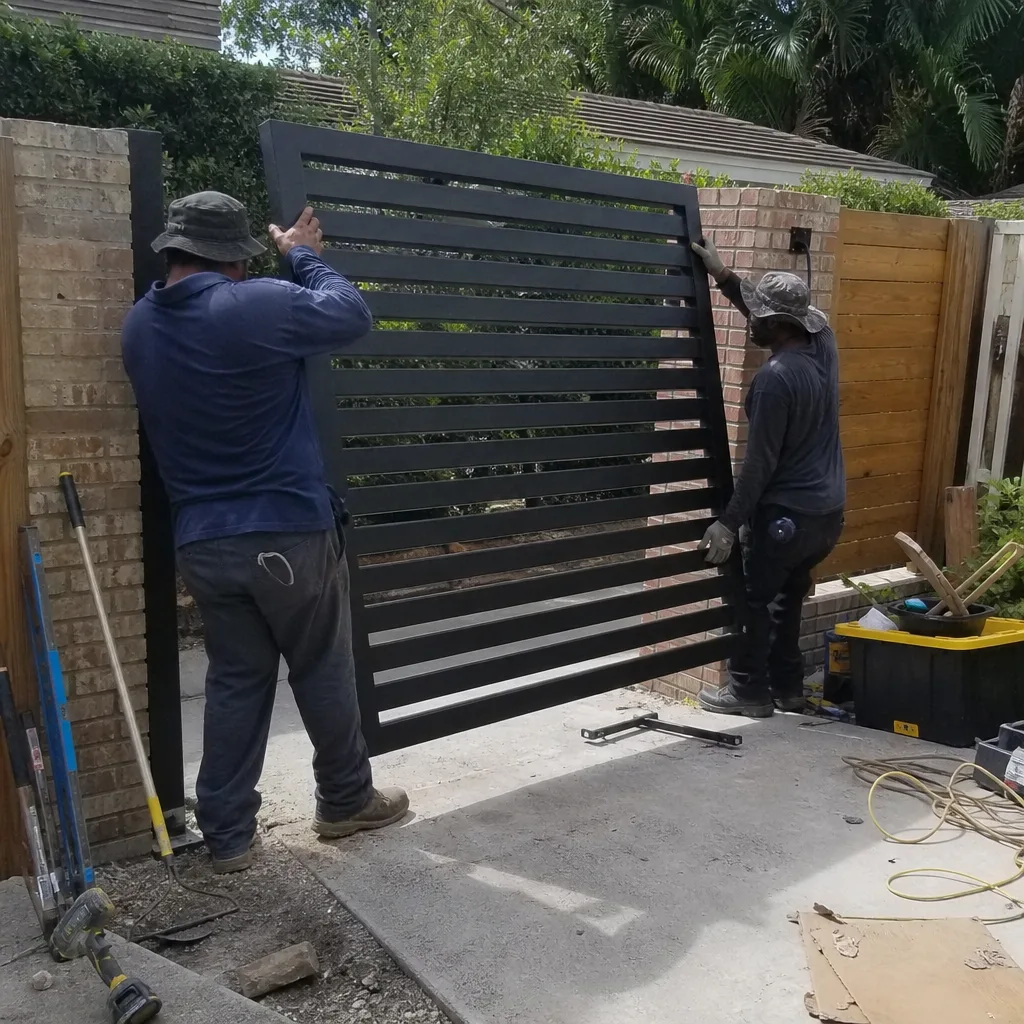
Gate failures in Fort Lauderdale are predictable if you know what to watch for. Grinding means gear train or chain problems. Clicking means capacitor or relay. Hesitation means excess current draw. Incomplete travel means limit switch drift or sensor false-triggering. Corrosion moves through three stages, each with a window for cheaper intervention. Control board codes are self-reporting diagnostics. An observation log converts vague symptoms into actionable data. The gate tells you what’s wrong before it fails. The question is whether you’re listening and whether you act while the repair is still small and the price is still written in front of you. Call Vance Gate Repair Fort Lauderdale at (754) 399-1474 for a free estimate, a written price before any work starts, and a documented record of everything we find.
Written by Adrian Vance, Owner at Vance Gate Repair Fort Lauderdale, serving Fort Lauderdale since 2014.